
Constructing and Using Survival Caches: A Step-by-Step Guide
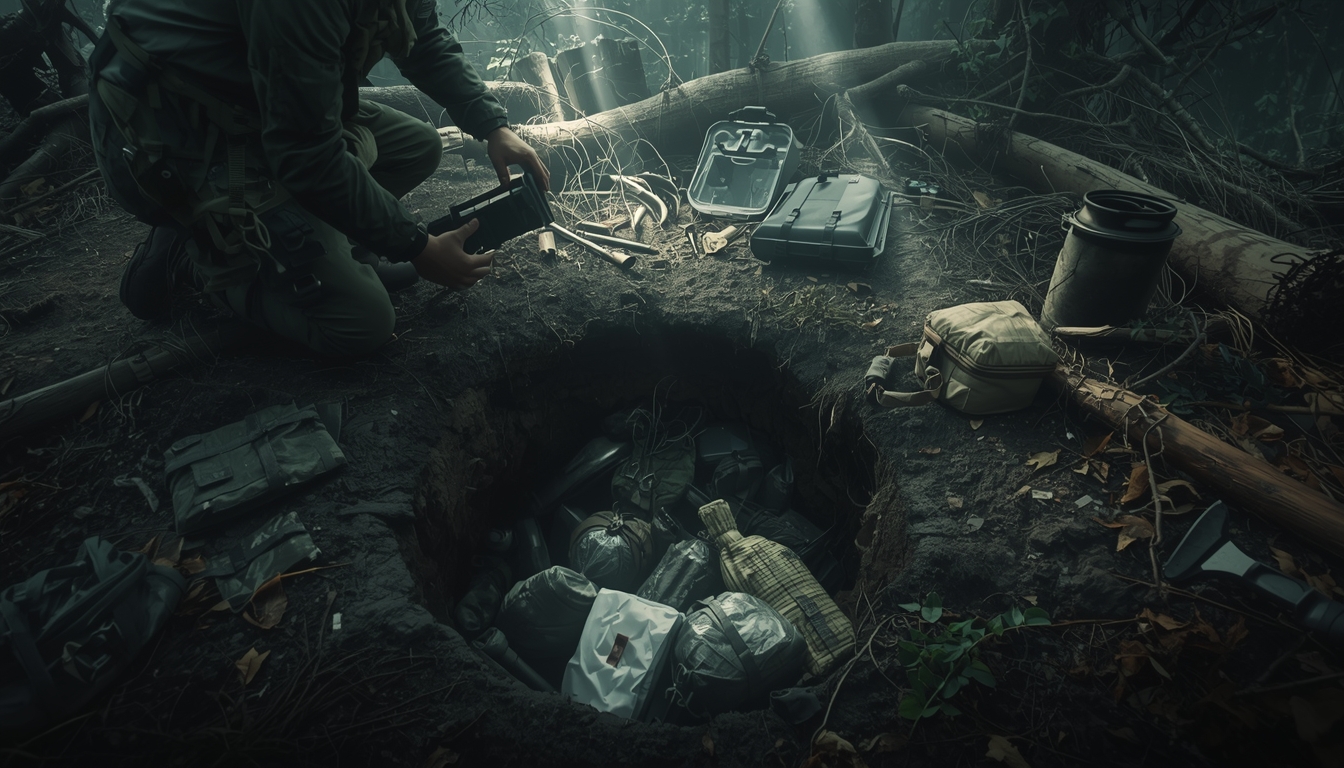
Constructing and Using Survival Caches: A Step-by-Step Guide
Defining What Your Survival Cache Needs to Do
Start With Your “Likely Scenario” (Not Your Worst-Case Fantasy)
A survival cache is just pre-positioned capability. It’s gear you’ve already staged so you don’t have to improvise later.
Related Articles:
The easiest way to waste money is stocking for a movie-style apocalypse when your real risk is a winter power outage, wildfire evacuation, or being stranded on the road overnight.
Start by writing down your top three realistic scenarios in your area:
- Severe weather
- Extended outage
- Vehicle breakdown
- Civil disruption
- Sudden need to leave town
Use official guidance to sanity-check your baseline. For example, Ready.gov’s emergency supply kit guidance gives a solid minimum for water, food, and essentials.
Next, define the job your cache must perform:
- “Keep me safe for 24-72 hours”
- “Bridge me to my next cache”
- “Support me while I shelter at home”
Once you know the job, your item choices get dramatically clearer.
Quick Summary: A cache isn’t a general-purpose gear bin. It’s a planned response to a specific problem.
Set a Time Horizon and a Standard of Comfort
Your cache should match a specific duration. A 24-hour cache can be small and simple.
A 7-day cache gets heavier and more expensive fast, so you want to build up to it in layers.
Next, decide your standard: bare survival or functional comfort.
Bare survival usually means calories, water treatment, insulation, and a way to signal. Functional comfort adds the stuff that keeps you thinking clearly:
- Spare socks
- Caffeine
- Hygiene basics
- Pain relief
- A simple shelter layer
A practical approach is “72 hours functional.” Many emergency management agencies plan around 72-hour self-sufficiency during disruptions, and FEMA preparedness resources reflect that general planning mindset.
Before You Build Checklist:
- [ ] Your top 3 likely emergencies are written down
- [ ] Your cache duration (24/72 hours, 7 days, etc.) is chosen
- [ ] Your cache job is defined (bug-in support, bug-out bridge, route resupply)
- [ ] The people it supports are listed (you, partner, kids, pets)
Choosing the Right Type of Cache (And Where It Fits)
Home, Vehicle, Route, and Remote Caches
With your goals set, the next step is choosing which cache types make sense for your life.
Think of caches like layers. Your home cache is the “mothership.” Vehicle caches cover you when you’re away from home.
Route caches help you move from Point A to Point B. Remote caches are for places you can’t access daily but might need during a major disruption.
Here’s a quick comparison to help you decide what to build first:
| Cache Type | Best For | Pros | Cons |
|---|---|---|---|
| Home cache | Power outages, shelter-in-place | Largest capacity, easiest to maintain | If you must evacuate, it may be left behind |
| Vehicle cache | Breakdowns, unplanned nights out | Always with you, fast access | Heat/cold damage, theft risk |
| Route cache | Evacuation or foot travel | Reduces carried weight, adds redundancy | Requires planning, concealment, and permission |
| Remote cache | Long-term disruptions | High resilience if home is inaccessible | Harder to inspect and rotate |
A strong starter system is a 72-hour home cache plus a 24-hour vehicle cache.
After that, route caches come once you’ve validated your evacuation routes and you know where you’d actually travel.
Selecting Locations Without Creating New Problems
A cache location has to survive two threats: the environment and other people.
Water intrusion, temperature swings, and rodents ruin more caches than “bad guys.” At the same time, a cache that’s easy for you to grab is often easy for someone else to stumble onto.
For home caches, think accessible but not obvious. A sealed tote in a closet is fine for many households.
For vehicle caches, use low-profile storage and avoid advertising labels.
For anything placed off-property, legality matters. Don’t bury supplies on land you don’t have permission to use.
If you do place a route cache, pick a location you can revisit discreetly-and one that won’t be disturbed by landscaping, flooding, or construction.
Warning: If you can’t reliably return to inspect a cache, don’t store critical meds or water in it. Use it for durable basics instead.
Containers, Waterproofing, and Environmental Protection
Picking Containers That Match the Threats
Now that you know where your cache might live, you can choose a container that won’t fail in that environment.
Your container is part of the survival gear. It needs to handle crushing, moisture, pests, and temperature changes.
Common options include:
- Gasketed plastic totes
- Ammo cans
- PVC tubes with clean-out caps
- Purpose-built dry boxes
For vehicle caches, soft-sided bags can work. But they don’t protect against leaks or crushing as well as hard containers.
If you’re storing water, follow conservative storage guidance. The CDC’s emergency water storage recommendations are a solid reference for safe containers and rotation.
Pros:
- Hard containers protect from impacts and rodents
- Gaskets and desiccants reduce moisture risk
Cons:
- Hard containers can be bulky and harder to conceal
- Some plastics warp or crack under extreme heat/cold
Waterproofing and Redundancy (Because One Seal Will Fail Eventually)
Even “waterproof” containers can fail. Gaskets dry out.
Lids get cross-threaded. Temperature swings create condensation.
That’s why you should plan for layered protection.
A simple system works well:
- Put critical items (fire kit, batteries, medical) into heavy-duty zip bags or vacuum-sealed pouches.
- Place those pouches into the main container.
- Add desiccant packs to reduce humidity.
- Consider a second barrier like contractor bags.
Don’t forget corrosion. Metal tools and ammo cans can rust in humid climates.
A light oil wipe, silica gel, and keeping metal separated from damp fabrics helps.
Pro Tip: Pack a small inspection card inside the lid (date packed, what’s inside, next rotation date). It turns maintenance into a 2-minute task instead of a mystery box.
Temperature Planning: What Not to Store (Yet)
Heat and cold quietly destroy gear. Vehicles are especially harsh.
Summer heat can ruin batteries, medications, and some plastics. Freezing can burst water containers and degrade certain foods.
For off-site caches, keep the focus on durable items:
- Water treatment (not water itself, unless you can rotate)
- High-calorie stable foods
- A basic shelter layer
- Fire-making
- Lighting
- Simple medical basics
Save temperature-sensitive items for caches you can check frequently.
With the basics protected, you’re ready for the next leap: deciding what actually goes inside and how to pack it in a way that makes sense under stress.
Building Your Core Loadout With “Cache Modules”
Water and Calories: The Two Things That Collapse Fast
If your cache only does two jobs well, make it water and calories.
Water is heavy. In most cases, your best move is caching treatment + containers (filter, tabs, collapsible bottle).
Only cache stored water where you can rotate it reliably.
For food, focus on stable, high-calorie, low-prep options. Think energy bars, nut butter packets, instant rice, ramen, or freeze-dried meals-assuming you have a way to boil water.
A common mistake is packing “healthy pantry food” that takes 45 minutes and a full kitchen to cook.
Here’s a clean decision rule: if you can’t eat it cold during a stressful moment, it shouldn’t be your only option.
| Module | Good Picks | Notes |
|---|---|---|
| Water | Filter, purification tabs, metal cup | Tabs are lightweight backup; cup supports boiling |
| Calories | Bars, trail mix, instant meals | Mix “eat now” and “eat later” foods |
Pro Tip: Pack one no-cook day of food even if you plan to carry a stove. Sometimes you’ll be moving, hiding, or conserving fuel.
Warmth, Shelter, and Medical: Your “Stabilize the Situation” Kit
Once water and food are covered, your next job is preventing small problems from turning into medical problems.
That means insulation, basic shelter, and medical support you can actually use.
For warmth, you’re usually better off caching layers and socks than bulky sleeping bags-especially in vehicle or route caches.
Add a compact emergency bivy or space blanket as a backstop, but don’t let that be your whole plan.
For medical, skip the fantasy trauma kit unless you’ve trained with it.
Instead, build a “common problems” kit:
- Bandages
- Blister care
- Antiseptic wipes
- OTC pain meds
- Antihistamine
- Personal essentials (prescription needs, spare contacts/glasses)
Blisters and sprains are what ruin movement.
Quick Reference:
- Cold risk: extra socks + beanie + gloves beat most “tactical” gadgets
- Shelter baseline: tarp/poncho + cordage + a way to cut cordage
- Medical baseline: basic bleeding control, blisters, pain, allergies
Packing By Cache Type So It’s Useful on Your Worst Day
Home Cache Staging: Build a “Grab-and-Go Shelf” Inside Your Bigger Supply
With your modules chosen, you can now stage them differently depending on where they live.
Your home cache can be large, but the trick is making it fast to use. If everything is stacked in random bins, you’ll waste precious minutes digging.
Create a small “grab-and-go shelf” (or one dedicated tote) inside the bigger home cache.
This is the stuff you’d want if the power dies at 2 a.m.:
- Headlamps
- Batteries
- A radio
- First-aid basics
- A 24-hour food/water solution
Then keep bulk behind it: extra food, water, hygiene, and comfort items.
A practical example is storing your cooking gear together-stove, fuel, lighter, pot-so you’re not hunting across three different containers.
Common mistake: packing gear you’ve never opened. If you don’t know where the on/off switch is on your camp stove, it’s not preparedness.
It’s clutter.
Vehicle Cache Setup: Heat-Proof, Theft-Resistant, and Actually Reachable
Vehicle caches fail when they turn into a melted mess in summer-or disappear in a smash-and-grab.
You can’t control everything. But you can design around the realities.
Keep heat-sensitive items (meds, certain batteries, chocolate, aerosol cans) out of the car unless you rotate constantly.
Choose tools and supplies that tolerate extremes:
- Water treatment
- A metal bottle
- A wool blanket
- Basic food bars
- A headlamp with lithium batteries
- A simple first-aid kit
Also think about access. If your trunk won’t open after a collision, can you reach essentials from the cabin?
Even a small “driver kit” in the glove box-light, charger, cash, whistle-can bridge that gap.
Warning: Don’t mark containers with labels like “SURVIVAL,” “AMMO,” or “EMERGENCY FOOD.” You’re advertising value.
Route and Remote Caches: Pack for Durability, Not Comfort
Route and remote caches should feel boring-and that’s a compliment.
Your goal is to store durable basics that still work after months of temperature swings and humidity.
Think in terms of “restart capability”:
- Water treatment
- Fire kit
- Compact shelter
- Calories
- Spare navigation aid (paper map in a sealed bag)
If you’re caching footwear or clothing, prioritize items that still matter if your primary gear fails:
- Dry socks
- A warm layer
- A rain shell
Keep the load realistic. A route cache is not a second home.
If it’s so big that you dread checking it, you’ll skip maintenance-and the cache will quietly die.
Practical example: If your evacuation plan involves a 15-mile walk, a route cache halfway could be:
- Socks
- Foot care
- 1,500-2,000 calories
- Water tabs
- Lighter
- Compact poncho
Inventory, Rotation, and Testing So Your Cache Doesn’t Rot in Place
Simple Labeling and Inventory That Doesn’t Compromise Security
Once your cache is packed well, you still need to keep it usable.
Your cache should be easy for you to interpret and hard for others to exploit. That means internal clarity without external advertising.
Inside the container, use an inventory card and a packing date.
If you keep a digital list, avoid obvious file names like “Bug Out Cache Locations.” Use neutral naming and store it securely.
A clean system is to assign each cache a code (like “G1” for garage, “V1” for vehicle, “R1” for route).
List contents by module: water, food, shelter, medical, tools.
When you’re stressed, you don’t want to read paragraphs-you want to confirm the critical items are there.
Low-friction inventory checklist:
- [ ] Cache code + location description only you understand
- [ ] Date packed + next check date
- [ ] Modules listed (water/food/shelter/medical/tools)
- [ ] Notes on special items (keys, spare glasses, pet supplies)
Rotation Schedules and “Cache Drills” That Expose Weak Links
Rotation isn’t glamorous. But it’s what turns a cache into something you can trust.
Set a schedule based on what’s inside.
A good baseline is a seasonal check (4 times a year) for vehicle caches and any cache exposed to big temperature swings.
Home caches can often be checked every 6 months, especially if you’re using a pantry-style system where you eat and replace.
Then do small cache drills.
Once a quarter, grab your “grab-and-go shelf” and simulate a 30-minute power outage setup: lights, radio, quick meal, basic hygiene.
You’ll immediately notice missing batteries, awkward packing, or foods nobody wants to eat.
Pro Tip: If you dread checking a cache, it’s probably too complicated. Simplify until maintenance is easy enough to do on autopilot.
With maintenance handled, the final step is making sure you can retrieve and use caches under real-world pressure.
Retrieving and Using Caches Under Pressure
Plan Access Like You’ll Be Tired, Cold, and Using One Hand
A cache that’s perfectly packed but impossible to use quickly is basically a storage unit.
Build your retrieval plan around the moments when you’ll be least coordinated: night, bad weather, injury, or high stress.
Start by packing in open order:
- Top layer (first-use): light, gloves, water treatment, a snack
- Second layer: shelter, cooking, extra layers
- Bottom layer: everything else
When you open the container, you should be able to solve immediate problems in under two minutes.
Also think about physical access. If you have to unpack everything to reach the fire kit, you’ll eventually dump gear into the mud and lose something.
Use smaller inner pouches labeled by module so you can grab what you need without making a mess.
Pro Tip: Do a timed drill: set a 3-minute timer and see if you can go from “cache opened” to “water being treated + light working.” If you can’t, repack.
Set Decision Triggers So You Don’t Hesitate
The biggest “use” failure is hesitation.
People delay tapping a cache because they want to save it, prove they can tough it out, or they simply don’t want the hassle of opening and repacking.
Create clear triggers that tell you it’s time. Examples:
- “If I’m delayed more than 2 hours, I eat.”
- “If I’m cold enough to shiver, I put on the warm layer.”
- “If I’m down to one full bottle, I treat more water.”
For route caches, define triggers tied to distance and daylight-not emotions.
A simple rule is: “If I won’t reach the next safe stop before dark, I pull the shelter module now.”
The goal is to turn a cache into a decision-reduction tool.
Quick Trigger List (customize it):
- [ ] Water: treat when you hit 50% capacity, not 0%
- [ ] Food: eat small portions early to prevent energy crashes
- [ ] Warmth: add layers at first chill, not when you’re already cold
- [ ] Navigation: stop and confirm location at every major turn
Security, Legality, and Reducing Discovery Risk
Place Caches Where You’re Allowed-and Where They’ll Still Be There
A “remote cache” that gets dug up by maintenance crews or removed by land managers is a predictable outcome, not bad luck.
If you’re placing anything off your property, permission and land-use rules matter.
The cleanest options are locations you control or have explicit permission to use:
- A trusted friend’s property
- A rented storage unit
- A private campsite arrangement where the owner agrees
If you’re using public land for travel, treat caches as temporary and removable, and always follow local rules.
Environmental stability matters too. Avoid obvious drainage paths, dry creek beds, and low spots that can become flood channels.
If you want to sanity-check flood or terrain risk along a route, tools like USGS topographic mapping resources can help you understand the landscape before you commit to a location.
Warning: If you can’t place a cache legally and responsibly, don’t “get creative.” Instead, shift that cache to a vehicle, a friend’s house, or a carryable kit.
Keep Documentation Useful for You but Unhelpful to Everyone Else
You need a way to find your caches reliably without leaving a treasure map someone else could benefit from.
The trick is building a system that works for your memory and your family’s reality.
Use a coded reference that’s meaningless outside your context.
For example: “R2 = the second resupply point on Route Red” is fine if “Route Red” exists only in your own notes.
Keep the “decoder” separate from your general devices. And don’t store cache notes in a shared family calendar or obvious cloud folder.
If more than one person might retrieve the cache, align on the code system and do a practice run.
A spouse or teen who has never opened the container won’t magically become competent during an emergency.
Build simple instructions into the cache itself (one card, big lettering): what’s inside, what to take first, and what to leave.
Low-signature instruction card (inside the lid):
- Cache code + packed date
- “First grab:” light / water treatment / snack
- “If leaving with this:” take module pouches A + B
- “If sheltering here:” set up tarp first, then cook
Troubleshooting and Building a Resilient Cache Network
When a Cache Fails: What to Do Instead of Freezing
At some point, you’ll open a cache and find a problem: water intrusion, mold, dead batteries, crushed packaging, or missing items.
That’s frustrating. It’s also the reason redundancy exists.
If you find moisture, don’t “air it out and hope.” Separate anything damp immediately.
Wipe down hard surfaces, and assume paper goods and matches are compromised.
Your fix is relying on items that survive abuse:
- Purification tablets in sealed foil
- A lighter in a bag
- High-calorie foods in intact wrappers
If the cache is missing or disturbed, shift to the next layer in your system.
That could mean switching routes, heading to a known safe contact, or using the supplies you carry daily.
The point of multiple caches isn’t luxury-it’s options when the plan breaks.
Pro Tip: Treat every cache discovery (by you) as an audit. If something failed once, redesign the container-not just the contents.
Put It All Together With a Repeatable “Next 30 Days” Plan
If you try to build a perfect multi-cache network in one weekend, you’ll burn out.
You’ll also end up with half-finished bins and no maintenance plan.
A better approach is building in layers and locking in maintenance as you go.
Here’s a simple rollout that gets you to a functional system fast:
Week 1: Make one cache real
- [ ] Build or refresh your home “grab-and-go” tote
- [ ] Run one 30-minute drill (lights, water, quick meal)
- [ ] Write your trigger list on an index card and tape it inside
Week 2: Build the vehicle layer
- [ ] Pack a heat-tolerant vehicle cache + a small “driver kit”
- [ ] Practice accessing it from the driver’s seat
- [ ] Add a calendar reminder for seasonal checks
Week 3: Map your movement
- [ ] Identify two realistic routes (primary + alternate)
- [ ] Choose permission-based resupply points (friend/property)
- [ ] Decide what each point provides (water module vs. full resupply)
Week 4: Test and refine
- [ ] Do a short “go time” drill: grab, load, leave (even if you just drive around the block)
- [ ] Note friction points (missing items, slow access, confusing labels)
- [ ] Simplify: fewer items, better packaging, clearer modules
At that point, you don’t just own survival gear-you’ve built a working cache system with retrieval triggers, realistic placement, and a maintenance rhythm.
Your next best step is simple: schedule your first rotation date now.
Then commit to one small drill per quarter, so the system stays ready long after the initial motivation fades.