Thermal and Night-Discipline Fundamentals: Reducing Light Spill, IR Signature, and Camp Noise
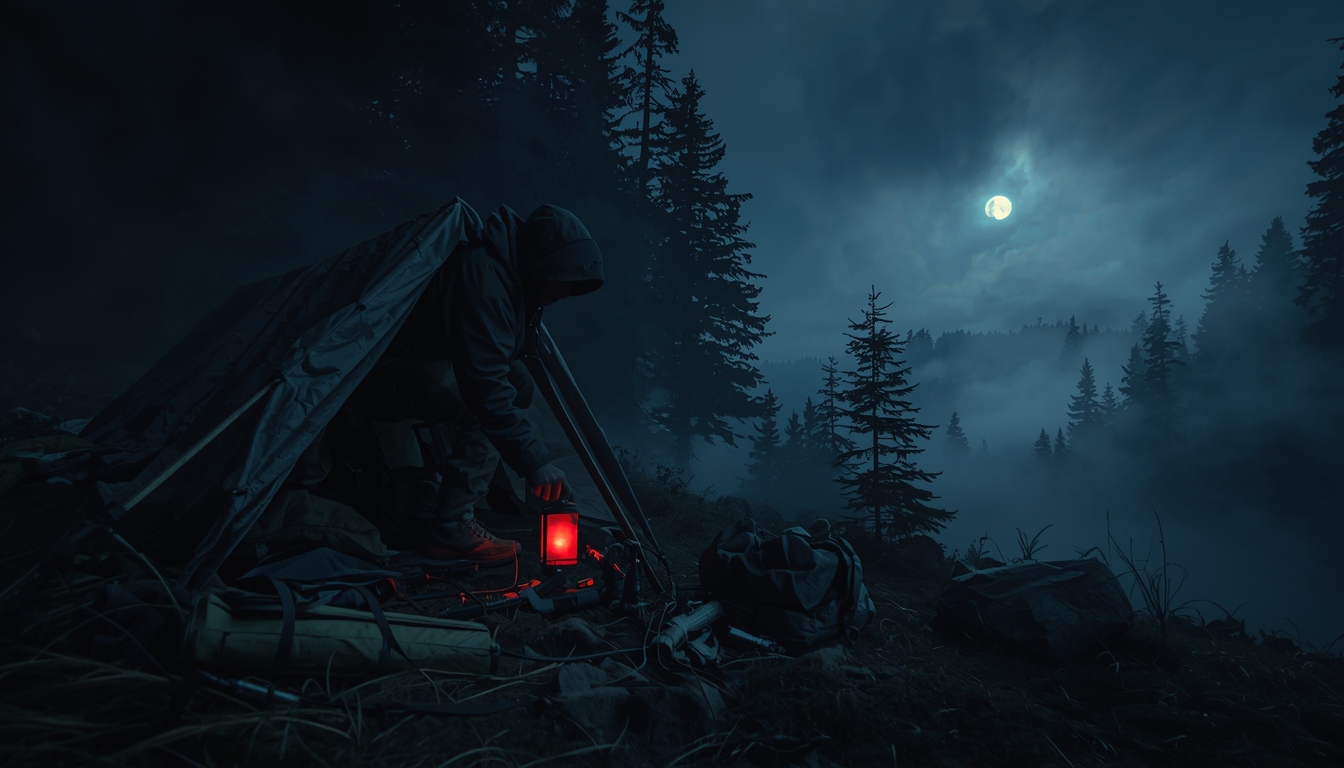
How Thermal, IR, and Visible Detection Actually Work
You don’t need to be doing anything “tactical” to benefit from night-discipline fundamentals. If you’ve ever felt exposed at a campsite, watched your headlamp light up a whole tree line, or noticed how a warm body pops on a thermal image, you already understand the core problem.
Related Articles:
At night, mistakes scale. A tiny light leak can travel hundreds of yards, and a quick “just for a second” white-light check can create a bright reference point that’s easy to re-acquire.
The same goes for IR and heat: the issue is rarely that you’re emitting something (you always are). The issue is that you’re creating contrast that’s easy to notice.
A useful mindset is this: you’re not trying to become invisible. You’re trying to avoid being obvious.
That means controlling what you emit (light, IR, heat, sound) and what you reflect (other people’s light, moonlight, ambient IR), while still keeping your camp functional.
Quick Summary: Night discipline is mostly contrast management. Reduce spill, reduce reflections, and reduce sharp “on/off” cues that draw the eye.
With that mindset in place, it helps to understand what your “signature” looks like through different detection methods.
Visible light spill is usually a reflection problem
Most people think they get spotted because their headlamp is bright. More often, it’s because the light hits something reflective and broadcasts your location for you.
Common reflectors include light-colored tents, glossy rain shells, bright guy lines, and even pale hands. If you aim a headlamp at your chest while you dig through a pocket, you’ve basically built a lantern.
A simple habit that works immediately: whenever you must use light, point it into a “light trap.” Good light traps include:
- The inside of your pack
- The ground right in front of your feet
- A dark jacket laid over your work area
IR “invisible” is only invisible to naked eyes
Infrared is a broad range, and a lot of “night” gear lives in the near-IR band that night vision devices can see. IR illuminators, IR strobes, and some camera focus-assist lights can be obvious beacons to anyone with NV.
Some consumer devices leak IR unintentionally. Certain phone face-unlock modules, security cameras, and remote-control emitters can put out near-IR.
You won’t see it with your eyes, but night vision can. If you want a deeper technical reference on how IR measurement and radiometry are treated in standards work, NIST is a solid starting point: NIST radiometry and optical measurements.
Thermal detection is about temperature contrast, not “heat” alone
Thermal imagers don’t need light. They detect differences in emitted infrared energy, which is strongly influenced by surface temperature and emissivity (how effectively a surface emits thermal radiation).
That’s why a warm person in a cool environment stands out. It’s also why a shiny, low-emissivity surface can look “weird” even if it isn’t hot.
A recently handled object (like a metal bottle) can even leave a temporary thermal trace. The pattern is often more revealing than the absolute temperature.
The practical takeaway
You rarely eliminate heat. Instead, you reduce contrast and avoid creating crisp, human-shaped hot spots.
That can be as simple as breaking up outlines, keeping warm items away from the outer skin of your shelter, and using terrain to block line of sight.
The “signature stack” that gets people noticed
In real life, detection often comes from stacking small cues. A brief white-light flash, followed by a consistent warm spot, followed by repeated metallic clinks is far easier to investigate than any one of those alone.
Train yourself to ask: “If someone noticed one thing, would the next thing confirm it?” Your goal is to avoid giving an observer a second confirming cue.
Now that you know what gets noticed first, the next step is controlling the easiest signal to manage: visible light.
Reducing Visible Light Spill Without Losing Usability
Choose lighting that supports control, not max brightness
For night discipline, brightness is less important than control. Beam shape, reliable low modes, and easy operation matter more than a high max output.
Look for a headlamp with:
- A true low setting (sub-lumen to a few lumens)
- A focused beam option (so you can aim precisely)
- A lockout (so it doesn’t turn on in your pocket)
Red light can help preserve your dark adaptation, but it’s not automatically “low signature.” A bright red beam still travels and still reflects.
Here’s a quick comparison to guide your choices:
| Light Option | What It’s Good At | Where It Fails | Best Practice |
|---|---|---|---|
| White light (low mode) | Color accuracy, quick tasks | Can be seen far if misused | Use the lowest usable mode, point into a light trap |
| Red light | Preserves dark adaptation | Still reflects; can look “unnatural” in fog | Keep it dim; avoid sweeping the area |
| Warm white (very low) | Comfortable close work | Still visible if bounced | Shield with your body or pack |
| Chem light / glow markers | Hands-free static marker | Constant beacon | Use only when you truly need a fixed reference |
Use your body and terrain as light discipline tools
The easiest spill reduction method is also the most ignored: block line of sight. If your light can’t be seen directly, the remaining risk is reflection.
When you need light, crouch or kneel so your body shields the beam from distance. Work on the far side of a tree, a boulder, or even the down-slope side of a small rise.
A practical example: if you’re adjusting guy lines, don’t stand upright and shine down. Squat next to the stake, keep the beam tight, and angle it into the ground so the soil absorbs it.
Control the “on/off” cue that draws attention
A sudden flash is often more detectable than a steady dim glow because it triggers the brain’s change detection. If you must use light, avoid repeated toggling.
Set your headlamp to the correct low mode before you turn it on. Do the task in one continuous session, then turn it off and keep it off.
Common mistake: the “gear check spiral”
People turn a light on to find one thing, notice another task, then keep re-checking. This creates multiple flashes in the same area, essentially marking your position.
Instead, make a short list in your head (or earlier on paper) and knock tasks out in one light-on window.
Manage reflective surfaces in camp
Even with great light discipline, reflective materials can betray you. Light-colored tent walls, glossy cookware, reflective logos, and laminated maps can all throw light outward.
Two easy fixes that work in most camps:
- Cover reflective items with a dark cloth, or keep them inside your pack when not in use.
- Turn or pitch reflective surfaces so they face into cover (trees, rock faces) instead of open space.
If you camp near public lands or roads, it also helps to understand how ambient light carries and affects visibility. The National Park Service has a useful overview of skyglow and light pollution behavior at night: National Park Service information on light pollution.
Once visible light is under control, you can start managing signals you don’t see as easily: IR and thermal.
Understanding IR and Thermal Signature at Camp
IR discipline starts with knowing what emits near-IR
If you use any IR-capable tools (IR strobes, beacons, illuminators), treat them like white light: purposeful, brief, and aimed. Near-IR that helps you see through NV can also help someone else see you.
Also consider “accidental IR.” Some consumer electronics emit IR for sensing or focusing.
You don’t need to be paranoid, but you should be aware that “screen off” doesn’t always mean “nothing emitted.” A practical habit is to keep electronics inside the shelter or under a layer when not needed, and avoid pointing sensors outward.
Thermal signature is shaped by wind, moisture, and contact
Thermal visibility changes dramatically with conditions. Wind strips away warm boundary layers and can reduce how “hot” you look on the surface.
At the same time, wind can cool your surroundings and increase contrast. Moisture matters too: wet fabric can change heat transfer and cooling, sometimes creating a more uniform temperature and sometimes creating patchy, unnatural contrast.
If you want the technical grounding for why surfaces “read” differently, emissivity is the key concept. NIST’s measurement resources are a good jumping-off point for understanding how materials and surface properties affect radiative behavior: NIST optical and radiometric measurements.
Camp placement: reduce lines of sight before you think about gadgets
The highest-return “thermal countermeasure” is boring: don’t be in direct view. Thermal imagers still need line of sight, and terrain masking works regardless of technology.
Look for micro-terrain that blocks observation lanes. The down-slope side of a ridge, the back side of a dense brush line, or a shallow depression can keep you from being silhouetted.
At-a-glance placement priorities
- Avoid ridge lines and open flats
- Use background clutter (mixed vegetation, rocks) to break up outlines
- Prefer locations where an observer would have to move to gain a clean angle
Heat management: avoid creating crisp hot spots
Inside camp, the biggest thermal giveaways tend to be localized and predictable. Common examples include a stove run in the open, a hot pot set on a cold rock, or a warm sleeping pad pressed against a thin tent wall.
You don’t have to eliminate these. You just want to avoid placing hot items where they create a sharp, human-patterned shape from outside.
A simple routine that helps:
Low-signature thermal habits checklist:
- [ ] Cook closer to cover than you think you need (behind brush or terrain)
- [ ] Let hot cookware cool inside a pack vestibule area or under cover, not on a bare rock
- [ ] Keep warm water bottles and heaters away from the outer tent wall
- [ ] Minimize repeated trips in the same exact path (footpaths can show contrast)
Sound discipline ties into this more than most people expect. Repeated movement, zippers, and metal-on-metal clinks not only travel far at night, they also force you to use more light and spend more time exposed.
For context on why nighttime sound can be so disruptive (and how quickly it becomes noticeable), the CDC’s overview of noise and its effects is a helpful baseline: CDC guidance on noise exposure and sound.
With the basics covered, the next step is building a camp workflow that stays quiet and keeps you from reaching for light out of frustration.
Building a Quiet Camp Workflow That Also Reduces Light Use
Pre-stage your “night kit” so you stop rummaging
Most camp noise and accidental light spill starts the same way: you can’t find something quickly. You dig, shake, unzip, and eventually turn a light on to speed things up.
The fix is simple, and it works. Before it gets dark, set up a small “night kit” pouch or pocket that always holds the items you’ll realistically need after dusk.
Think of it as friction reduction. If your headlamp, lighter, earplugs, and water treatment are all in one predictable place, you can do tasks by feel and keep your light-off windows longer.
A simple night kit loadout
- Headlamp (locked out) and one spare battery
- Small roll of tape, or a few strips wrapped around a card
- A lighter or fire steel (even if you don’t plan to use a fire)
- A snack that doesn’t crinkle loudly
- A small piece of dark cloth (for covering reflective items or creating a light trap)
Replace “multiple short trips” with one deliberate movement block
The biggest noise and exposure multiplier is getting up repeatedly. You unzip the shelter, step on sticks, clink a bottle, then come back and do it again ten minutes later.
Even in non-tactical camping, it’s the pattern that makes you noticeable. Instead, plan one movement block after dinner and before full dark:
- Water run
- Bathroom
- Guyline adjustments
- Food hung or stowed
- Tomorrow’s clothing set
If something can be staged early, do it while you still have ambient light. For example, if you know you’ll need to filter water at night, fill your dirty-water container before dusk so you can filter inside a vestibule or behind cover.
Quiet handling: treat every contact point as a noise source
Noise discipline isn’t just “be quiet.” It’s identifying what actually makes sound in your hands, then changing how you manipulate it.
Here’s an at-a-glance table you can use to audit your setup:
| Common Noise Source | Why It Happens | Low-Noise Fix | Extra Benefit |
|---|---|---|---|
| Zippers | Fast pulls, tensioned fabric | Slow pull, support fabric with the other hand | Less wear on zipper tracks |
| Metal-on-metal (keys, carabiners, cookware) | Hard contact surfaces | Separate with cloth, tape, or rubber bands | Less scratching and lost gear |
| Velcro | Sudden separation | Peel slowly from one corner, press to re-close quietly | Reduced snagging |
| Crunchy wrappers | Rigid plastics | Repackage at home into soft bags | Smaller trash volume |
Small technique that makes a big difference
When you unzip anything, pinch the fabric right next to the slider to reduce tension. Then pull the zipper with a steady, slow motion.
It sounds minor, but it often cuts zipper noise dramatically.
Build a “lights-out standard” with your group
If you camp with friends or family, one person’s habits can undo everyone else’s discipline. The simplest solution is a shared standard that doesn’t feel like a lecture.
Agree on a lights-out time, a maximum brightness rule (for example, lowest mode only), and a default work area where light is used (behind a tree line, inside a vestibule, or down-slope).
Also decide what happens if someone truly needs bright light for safety. One controlled use is better than multiple panicked flashes.
Quick reference: If you have to use light, use it once, in one place, for one reason. Then shut it down.
With your workflow tightened up, you can start refining the “routine tasks” that create the most noise and movement after dark.
Low-Signature Routines for Cooking, Hygiene, and Gear Access
Cooking without advertising your position
Cooking is often the noisiest and most visually obvious thing you do at camp, even if you never use a fire. Stoves can hiss, pots clank, and your movements become repetitive as you reach for spices, utensils, and water.
The easiest improvement is to treat cooking like a staged process. Before dusk, assemble everything you’ll touch into a single “kitchen footprint” so you’re not repeatedly opening packs and moving around.
Step-by-step: a quiet, controlled cook setup
- Lay out a small ground cloth or jacket as your work surface (it dampens sound and reduces dropped-item clatter).
- Place stove, fuel, lighter, pot, and meal in a tight triangle within arm’s reach.
- Pre-open packaging and pre-measure anything you can while there’s still light.
- When you cook, keep conversation low and movements slow; fast hands make noise.
If you’re cooking after dark, keep the flame shielded by terrain or vegetation whenever possible. You’re not just hiding light; you’re also minimizing the time you spend upright and exposed.
Hygiene and bathroom breaks with minimal exposure
Nighttime hygiene is a common reason people start wandering with a headlamp. The better approach is to build a predictable route and a predictable kit.
Before nightfall, identify a bathroom area that’s close enough to reach quietly but far enough to respect your camp. Clear a couple of obvious trip hazards with your boot while there’s still ambient light.
That small prep step reduces the chance you’ll need light later just to avoid stepping on branches.
Hygiene kit that prevents noisy improvisation
- Toilet paper in a soft bag (not the factory plastic)
- Hand sanitizer in a small bottle you can open one-handed
- A small trash bag that doesn’t crinkle loudly
- A headlamp used only if necessary, already set to low
Pack organization that prevents the “zipper concert”
Once it’s dark, your pack becomes a noise machine if everything is loose. The goal is not perfect organization; it’s predictable access.
Use “zones.” One zone for sleep (bag, pad, layers), one for kitchen, and one for tools and first aid.
Inside each zone, use one or two soft pouches instead of a dozen tiny hard items floating around.
A real-world example: if your stakes, guyline tensioners, and repair tape live together, a nighttime adjustment becomes one quiet unzip and one quiet fix. If they’re spread across pockets, you’ll create multiple sound events and usually add light to solve it.
Managing shelter noise and silhouette during the night
Even when you’re fully set, shelters can betray you with fabric snaps, flapping, and the distinct outline of a person moving inside. You can reduce both with simple adjustments.
Start by tightening lines before dark, then do a second tension check once temperatures drop. Many materials slacken as they cool, and that’s when flapping starts.
If wind picks up in the middle of the night, don’t chase every tiny flutter. Make one deliberate adjustment and stop.
Two small shelter habits with outsized payoff
- Keep frequently needed items in the same place every night (headlamp, water, footwear). Less movement inside means less fabric shifting and less silhouette change.
- Avoid pressing warm items against the outer wall (hot bottle, heater, even your feet). It can create a clear warm shape and can worsen condensation.
Once your camp is quiet and stable, the next challenge is moving and working outside camp without creating obvious patterns.
Moving and Working Outside Camp Without Creating Patterns
Use route discipline: one path in, one path out
Once you’ve tightened guy lines, staged your kit, and quieted your shelter, the next big giveaway is movement. The problem isn’t that you moved at night.
The problem is that your movement looks purposeful and repeatable.
A simple rule that works in almost any environment is route discipline. Pick one route for water, one route for bathroom, and one route to your cooking spot, and keep them short and sheltered.
Wandering in different directions with inconsistent pacing is what creates obvious activity.
Route discipline in practice
- Walk close to cover (brush edges, tree lines, rock shadows) instead of cutting across open ground.
- Step around noisy ground (dry sticks, loose rock) even if it adds ten seconds.
- If you must pause, do it behind something that blocks line of sight.
Control your silhouette during “tall moments”
Standing upright is when you’re most visible, and it’s also when you tend to use light. Tall moments include filtering water, hanging food, adjusting tarp ridgelines, and changing layers.
If you can reduce how often you stand fully upright, you reduce how often you become a clean, human-shaped target.
Try building a habit of working from one knee when possible. Even something as basic as setting your pack down at a comfortable working height (like on a log behind cover) can keep you from standing with a headlamp pointed outward.
A quick silhouette check
If you can see the open horizon while you work, you’re probably silhouetted to someone else. Rotate until your background is cluttered (trees, boulders, brush), then continue.
Time your tasks to match ambient conditions
Thermal, visible, and sound signatures all change with weather and night conditions. Wind can mask small noises but increases fabric movement.
Fog and humidity can make any light look bigger, while also softening some thermal contrast.
You don’t need to obsess over conditions, but you should use them. If wind is already ripping, do the noisy work then (tighten lines, reorganize kitchen) and avoid creating new noises during calm windows.
If the night is still and clear, treat every zipper and footstep as louder than you think. For readers who want a deeper understanding of how your eyes adapt (and why one bright flash can set you back), the NCBI Bookshelf overview of visual adaptation is a helpful reference: NCBI Bookshelf on dark adaptation and visual physiology.
Handle “unexpected problems” without blowing up your signature
The most common failure point isn’t normal camp life. It’s the surprise event: a dropped headlamp, a tent stake that pulls out, a sudden need for first aid, or a late arrival to camp.
When something goes wrong, your job is to keep it from turning into a cascade of light and movement. Slow down, pick one work area, and stage the fix like a mini project.
The controlled-fix method
- Stop moving and listen for a few seconds (you’ll often hear where the dropped item went).
- Choose one sheltered spot to work from.
- Use one continuous light-on window if you truly need it.
- Once the problem is solved, return to “lights out” rather than continuing to reorganize.
As you tighten these habits, you’ll start noticing a pattern in your own mistakes. The next section helps you troubleshoot the most common ones before they become repeat problems.
Troubleshooting and Common Mistakes That Get You Noticed
Over-correcting: chasing perfection creates more signature
A surprisingly common mistake is trying to eliminate every tiny sound or every flutter of fabric. You get up repeatedly to tweak guylines, and you keep opening pouches to re-pack “better.”
You end up generating far more movement and noise than the original problem.
A better standard is “stable enough.” Make one deliberate adjustment, then stop.
If it can wait until first light, it probably should.
The bright-screen trap (and how to avoid it)
Phones and GPS devices are convenience tools, but they’re also one of the easiest ways to create a visible beacon. Even if you keep your headlamp disciplined, a bright screen aimed outward can light your face and shelter interior.
Set your device to the lowest brightness before dark, and use a red-shift or night mode if available. Then put it away between checks instead of leaving it active on your lap.
Better navigation habits at night
- Confirm your route before dusk so you’re not map-checking repeatedly.
- If you must check a screen, do it behind cover and close to your body.
- Avoid turning on flashlight functions “just for a second.”
Noisy food and trash: the small sounds that travel
Even in a breezy forest, certain sounds cut through: crunchy wrappers, stiff chip bags, and loud plastic. If you’ve ever heard someone open a snack from across a quiet campground, you already know how far it carries.
Fix it at home. Repackage food into soft bags, pre-open tear notches, and plan one snack window rather than repeated small grabs.
Your goal is to remove the sharp noises that stand out against natural nighttime sound.
Heat mistakes that make a clean target shape
A lot of thermal contrast problems come from geometry. A warm object placed against a thin fabric wall can create a crisp oval or human-limb shape that doesn’t belong in nature.
Keep warm items central. If you use a hot water bottle, place it inside your sleep system away from the tent wall.
If you need to store a warm pot or stove after use, don’t set it on a cold, bare rock in the open where it creates a bright, obvious spot.
Quick thermal sanity checks
- If an item feels hot to your hand, treat it as a high-contrast object until it cools.
- Avoid clustering all heat sources in one tight area near the shelter edge.
- Be aware of “contact heat prints” on cool surfaces like rocks and logs.
Once you understand the failure points, the final step is turning all of this into a repeatable routine you can run when you’re tired.
Putting It All Together: A Low-Signature Night Routine You Can Repeat
A practical pre-dark checklist you can run in five minutes
The fastest way to get consistent is to reduce decision-making. When you’re tired, you default to habits, so build habits that keep you quiet and low profile.
Use this checklist before the light is gone. You’ll eliminate most of the reasons people end up turning lights on later.
Pre-dark setup checklist:
- [ ] Pick a camp spot that blocks line of sight (down-slope, behind vegetation, against terrain).
- [ ] Stage your night kit and put it in the same place every trip.
- [ ] Set headlamp to low and lock it out.
- [ ] Pre-stage kitchen items into a tight footprint.
- [ ] Identify one bathroom route and clear obvious trip hazards.
- [ ] Tension shelter lines and do a quick fabric/noise check.
A “lights-out” operating standard that still feels normal
Night discipline shouldn’t make camping miserable. The goal is to keep camp functional while preventing accidental spikes in light, noise, and heat contrast.
A simple standard you can follow is:
- Do tasks in batches
- Keep your work low and shielded
- Avoid repeated on/off cues
If you’re with a group, pick one shared work zone and one shared rule about brightness. That one agreement eliminates most of the chaos.
What this looks like in real life
If you need to refill water at 10 p.m., you don’t wander and scan with a headlamp. You take the pre-staged container, walk the same sheltered route, do the work in one spot, and return.
Next steps: practice in low-stakes environments
You don’t need specialized gear to get better at this. You need repetition.
Practice in your backyard, at a familiar campground, or on a short overnight where you can focus on the process.
Give yourself one specific goal per trip. For example, “No light used after 9 p.m.” or “All nighttime tasks done in one movement block.”
Within a few outings, you’ll notice you’re not only quieter and less visible. You’re also more organized and more rested.
The final takeaway: reduce contrast, reduce repetition
If you remember only two ideas, make them these.
First, manage contrast: don’t create bright reflections, sharp thermal shapes, or abrupt changes that draw attention. Second, reduce repetition: repeated trips, repeated zipper noise, and repeated light flashes are what turn a normal camp into an obvious point of interest.
Once those two habits are in place, everything else in this guide becomes easier. You’ll use less light, move less, make less noise, and spend more time actually resting instead of constantly fixing problems you accidentally created.