Survival Fishing Without a Rod: Handlines, Improvised Hooks, Fish Traps/Weirs, and Safe Processing
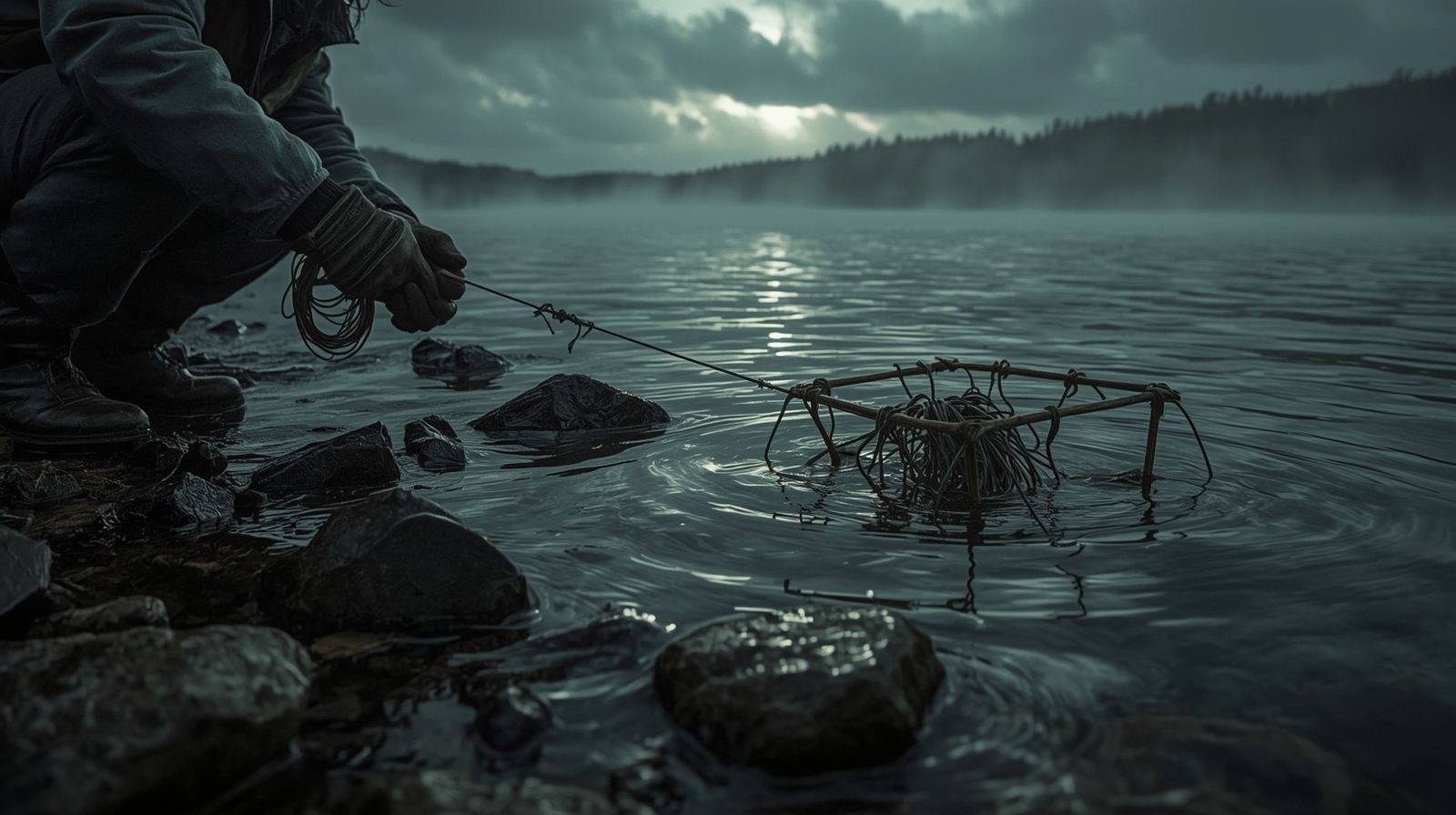
The survival fishing mindset: calories, risk, and time-on-task
Survival fishing without a rod is an exercise in priorities. You’re not “sport fishing” anymore. You’re trying to turn water into calories without burning more energy than you gain.
You also need to avoid injuries that slow you down. In the field, small hand injuries turn into big problems fast because everything else (fire, shelter, movement) depends on your hands.
In training, we treated procurement like any other mission: define the objective, pick the simplest method that works, and build in a margin for failure. Fishing is the same.
A handline that stays in the water for two hours while you improve shelter beats an active method that ties you up all afternoon.
Decide when fishing is worth it
Fishing is most worth it when you can be stationary near water, when temperatures allow safe food handling, and when the water actually holds fish you can catch.
If you’re dehydrated, exposed, or lost, fishing can become a distraction that costs you the day. The “easy calories” story falls apart when you burn daylight and still come up empty.
A good rule is to solve immediate survival problems first: water, shelter, and navigation. If you’re still moving to self-rescue, focus on travel and hydration, then fish opportunistically in the evening.
If you need help planning movement and keeping your bearings while you work water sources, review map-and-compass navigation in real terrain.
Build systems, not “attempts”
The best rod-free methods are passive or semi-passive. Setlines, simple traps, and small weirs (where legal) keep working while you gather fuel, treat water, or tighten up camp discipline.
Think in layers:
- Primary: your main method (most reliable for your water)
- Backup: your second method (covers different species or conditions)
- Bonus: a low-effort extra that might pay off
Here’s a practical example:
- A setline overnight
- A handline at dawn and dusk
- A small baited bottle trap for minnows you can use as bait
Know the legal and ethical reality
In an actual emergency, you may prioritize survival. Outside of that, traps and weirs are regulated heavily in many places.
If this is for preparedness, learn your state’s rules now and practice legal methods. It’s also smart to learn which species are protected, seasonal closures, and any special regulations for bait and gear.
If you want a reference point for species ranges and conservation context, the U.S. Fish and Wildlife Service has educational resources here: U.S. Fish & Wildlife Service.
—
Reading water without gear: where fish hold and when they feed
Without a rod, you win by putting something edible where fish already want to be. That means understanding “fish real estate”: current seams, oxygen, shade, and travel routes between cover and feeding zones.
If you’re new to reading water, focus on places that naturally concentrate fish. A narrow channel, an inlet stream, a culvert, a beaver-dam outflow, or a tidal pinch point often matters more than perfect bait.
Once you’ve identified a likely zone, slow down. Watch the surface, scan the banks, and look for movement before you start stomping around.
River and creek structure that pays off
In moving water, fish avoid fighting current all day. They hold on the edges of current where they can rest and still intercept food.
Target areas that “break” current:
- Eddies behind rocks and logs
- Seams where fast water meets slow water
- Undercut banks and root wads
- Tailouts below pools where current funnels food
Setlines and small V-shaped weirs work best where you have defined flow and a natural pinch point. If the stream is wide and shallow with uniform current, you’ll spend too much effort for too little return.
Lakes, ponds, and reservoirs: concentrate your effort
Still water can feel like an empty stadium. Your job is to find the “corners” where life stacks up.
Look for features that concentrate oxygen, food, and cover:
- Inlets/outlets (moving water brings oxygen and food)
- Weed edges (ambush cover)
- Drop-offs and points
- Shade lines (trees, cliffs, docks)
If you’re handlining, work parallel to weed edges or tight to structure. If you’re trapping, put the trap where minnows and small panfish cruise: along weeds, near submerged brush, or near a trickle of inflow.
Timing, stealth, and noise discipline
Dawn and dusk are reliable because light levels drop and fish move to feed. Night can be excellent for setlines, especially for catfish.
Stealth matters more than most people admit. Heavy footsteps on rock, throwing shadows, and splashing bait like a brick will push fish off the bank.
If you’re operating with others, coordinate movement and keep it quiet. A simple plan prevents someone from stomping the shoreline while you’re trying to fish.
The same discipline that helps in team movement applies here; see hand-and-arm signals for silent team movement.
—
Handlines that actually work: cordage, rigging, knots, and control
A handline is the simplest rod-free method because it’s direct. No moving parts. No reels. Just line management and solid knots.
The downside is just as direct. If you mismanage tension, you lose fish, burn your hands, or snap line.
Done right, a handline is quiet, compact, and effective in tight banks, under brush, or in urban water where a rod would draw attention. This is a method you can keep running with minimal gear.
Line selection and improvised spools
Use what you have, but know what you’re trading.
Common options and what they mean in practice:
- Paracord: works in a pinch, but it’s thick and visible. Strip inner strands if you need thinner line.
- Bank line/trotline cord: ideal if you packed it. Tough, abrasion-resistant, and made for the job.
- Dental floss or sewing thread: can catch small fish, but fails under abrasion and sudden runs.
Make a spool so you can manage slack. A flat stick, notched on both ends, works well.
Wrap in a figure-eight pattern to reduce tangles. Also, keep your working end secured so it doesn’t unwind in your pocket.
Quick reference: handline baseline setup – 15-30 feet of line – Small swivel if available (reduces twist) – Split shot or improvised weight – Hook or gorge hook – Drag system: gloved hand or cloth wrap
Knots and terminal rig that won’t slip
For terminal connections, keep it simple and strong. If you only know a couple knots under stress, make them count.
Reliable choices:
- Improved clinch (monofilament)
- Palomar (braid and mono)
- Snell knot (if you have a proper hook and want solid hooksets)
If you’re using improvised hooks with odd shapes, lash them with multiple wraps. Finish with a square knot backed by half hitches.
Weights matter with a handline. Too light and you drift out of the strike zone. Too heavy and you snag constantly. Start light, then add until you can hold bottom in the seam you’re targeting.
Fighting fish without cutting your hands
The most common handline mistake is grabbing hard when a fish runs. That’s how you get line burns or sliced fingers.
Wear gloves if you have them. If you don’t, wrap the line once around a smooth stick or a piece of cloth, then use that as your “drag.”
Keep steady tension and let the fish tire itself. You’re not horsing it in; you’re controlling it.
When you land the fish, don’t lift by the line unless it’s small. Slide the fish into shallow water or onto a flat rock, then secure it behind the head.
—
Improvised hooks and bait: making metal and bone do real work
Improvised hooks are one of those skills everyone talks about and few people do well under pressure. The goal isn’t to make a perfect J-hook.
The real goal is simpler:
- A sharp point
- A reliable gap
- A secure connection to line
If you can’t shape a hook, switch to a gorge hook or a trap. Don’t burn an hour making a museum piece when you could be running a passive system.
Improvised hook materials that hold up
Look for strong, springy metal or dense natural material.
Solid choices:
- Safety pins, paper clips (small fish)
- Nails or fence staples (can be shaped)
- Aluminum can tabs (only for tiny fish; bends easily)
- Bone splinters, hardwood thorns, carved shell (emergency only)
If you have a multitool, you can make almost anything work. Bend the metal, file or grind a point, then add a barb if you can.
If you can’t make a barb, don’t panic. Increase your odds with smaller bait and steady tension instead of a violent “hook set.”
Sharpening, barbs, and attachment
A hook that isn’t sharp is just jewelry. Use a rock, the striker on a ferro rod, or a file to create a needle point.
A quick sharpness test: the point should catch on your thumbnail.
Barbs help, but they’re not mandatory if you keep tension. If you can add one, create a small backward-facing spur with a careful bend.
For attachment, lash around the shank with tight wraps. If you have braided line, use it for lashings and finish with multiple half hitches.
Test it by pulling hard. If it shifts, rebuild it now, not after you hook a fish.
Bait selection that matches the water
Match bait to what fish already eat. In most freshwater, worms and grubs are the easiest.
Quick collection options:
- Flip rocks in shallow water for larvae and small insects
- Dig in damp soil near the bank for worms
Other workable baits:
- Insects (grasshoppers, beetles)
- Small strips of fish (if you already caught one)
- Dough bait (flour + water) for panfish
- Minnows (caught with a trap) for larger predators
If you’re fishing salt or brackish water, small pieces of shrimp, crab, or cut fish work well.
Just remember brackish environments can complicate water supply planning; see brackish and saltwater survival.
—
Gorge hooks and toggles: the minimalist option when hooks are impossible
A gorge hook (also called a toggle hook) is one of the oldest fishing solutions on earth. It’s a straight piece of bone, wood, or metal that sits inside the bait.
When the fish swallows, a steady pull turns it sideways and it “toggles” across the throat.
This isn’t a finesse tool. It’s a survival tool for bait-eaters that swallow aggressively.
How to make a gorge hook from natural materials
Choose a piece about the length of your thumbnail for small fish, or up to two inches for larger fish. Hardwood slivers, bird bone, or a piece of metal all work.
Steps:
- Carve or grind both ends slightly pointed (not razor sharp; just tapered).
- Cut a shallow groove in the center for your line.
- Tie the line in that groove with tight wraps and a locking knot.
- Test by pulling hard; if it slides, deepen the groove.
The bait needs to cover the toggle. Wrap the bait around it with thread or plant fiber if needed.
Baiting and hook-setting with a toggle
With a gorge hook, you don’t “set” the hook like a rod-and-reel. You let the fish take it.
The discipline piece is patience. If you yank early, you pull the bait out.
Wait for steady tension, then apply a firm, continuous pull. That steady pull is what turns the toggle.
This is where a handline spool helps. You can give controlled slack, then tighten up smoothly.
Think of it like tensioning a line on a knot, not snapping it like a whip.
When gorge hooks beat improvised J-hooks
Use a gorge hook when:
- You can’t make a reliable bend and barb
- Fish are swallowing baits (catfish, some trout conditions, saltwater scavengers)
- You’re running setlines overnight
Don’t use gorge hooks if you need quick releases or you’re trying to avoid deep hooking during non-emergency training. They’re effective, but they can be hard on fish.
—
Setlines and trotlines: passive fishing that keeps working while you do
If you’re trying to survive, passive fishing is your friend. A setline fishes while you sleep, gather fuel, or handle water treatment.
This is exactly the kind of “work while you work” system we looked for in the field. You’re buying time and stacking small advantages.
The key is building it safely so you don’t lose your line, injure yourself, or create a hazard for others.
A simple setline you can deploy fast
A setline is a single line anchored to shore or a stout branch overhanging water.
Use this checklist:
- Choose a solid anchor point above normal water rise
- Add a leader line if abrasion is likely
- Tie on hook/toggle, then weight below or above depending on target species
- Add a float (stick, bottle) so you can find it again
- Mark it discreetly so you don’t lose it
If you’re near other people, mark it clearly to avoid accidental entanglement. In remote areas, a subtle marker helps you avoid advertising your food source.
Trotlines for multiple hooks (and multiple problems)
A trotline is a main line with multiple dropper lines and hooks. It can be extremely effective, but it increases entanglement risk and legal complications.
If you use one, keep it short and simple. Space droppers so fish don’t tangle.
A smart durability trick is to use weaker dropper line than the main line. That way, a snag breaks a dropper, not the whole system.
Pros and cons matter here:
- Pros: high efficiency, passive, covers water
- Cons: easy to overfish, higher injury risk, harder to monitor
Marking, retrieval, and lost-line prevention
Lost line is more than lost food. It becomes litter and can injure wildlife.
Build a retrieval plan before you deploy the line. Use a fixed knot you can untie with cold hands.
Avoid wrapping line around your wrist. If a fish runs, it can cinch and cut circulation.
For camp organization, keep your fishing gear staged so you can check lines quickly at first light.