Top 10 Tactical Backpacks Ranked for 2026: Mission-Matched Selection Guide
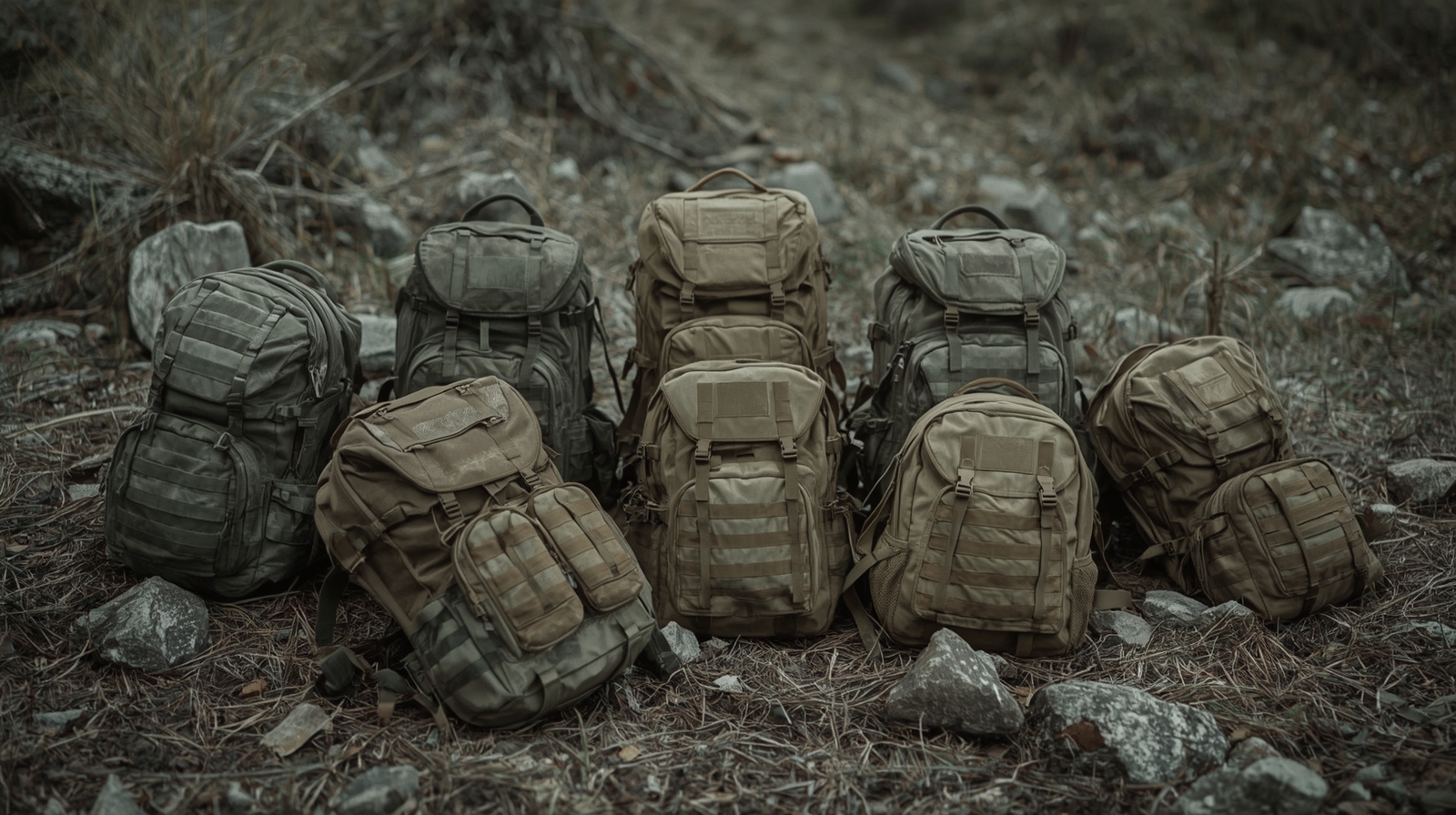
Choosing the wrong tactical backpack is an expensive mistake — and in the field, it can be a dangerous one. A pack that rides poorly under load, tears at the seams after two weeks, or lacks the organization you need when time matters can compromise your entire operation. The right choice starts with understanding what you actually need — not what looks capable on a product page.
This ranked comparison covers ten of the most capable tactical backpacks in 2026, organized by mission type so you can zero in on the right option fast. Each pack was evaluated against real-world performance criteria across three mission categories: rapid deployment and day use, 72-hour operations, and extended expedition or bug-out scenarios. Price points span from $45 to $445 — the goal is to match the right pack to the right mission, not recommend the most expensive option.
Quick mission-to-capacity reference before you read further:
— EDC and day patrol: 20–35L · quick-access admin pouches · low external profile
— 72-hour bug-out bag: 40–60L · internal frame · 1,500+ cu in main compartment · hydration sleeve
— Extended expedition / 30+ days: 35–55L · full suspension with load lifters · adjustable torso fit · maximum durability construction
A 60L pack is not automatically better than a 40L pack. It is heavier, bulkier, and encourages overpacking. Match capacity to your actual mission requirements — not your aspirational ones.
How We Ranked These Packs: Six Weighted Criteria
Every pack in this list was evaluated against six criteria weighted by their operational impact. Understanding the weights helps you recalibrate the rankings for your own priorities — if you never carry over 20 pounds, suspension matters less; if you’re building a 72-hour emergency bag, construction quality matters more.
Master Ranking: All Ten Packs at a Glance
| Rank | Pack | Best For | Capacity | Price Range | Link |
|---|---|---|---|---|---|
1 |
5.11 RUSH72 2.0 72-Hour Operations |
72-hour bug-out primary | 55L | $180–$220 | Buy ↗ |
2 |
Condor 3-Day Assault Budget 72-Hour |
Best value 72-hour option | 50L | $65–$85 | Buy ↗ |
3 |
Mystery Ranch 3-Day Assault Premium Patrol |
Professional patrol / premium build | 30L | $280–$320 | Buy ↗ |
4 |
Maxpedition Falcon-II Heavy-Duty EDC |
Urban EDC, max organization | 23L | $120–$150 | Buy ↗ |
5 |
GORUCK GR2 Long-Duration Ruck |
Decade-investment, expedition use | 34L / 40L | $395–$445 | Buy ↗ |
6 |
Osprey Farpoint 40 Tactical Hybrid Travel/Tactical |
Travel-to-field crossover | 40L | $160–$185 | Buy ↗ |
7 |
Red Rock Assault Pack Entry-Level Patrol |
Budget starter / secondary pack | 45L | $45–$65 | Buy ↗ |
8 |
Hazard 4 Evac Plan-B Urban EDC / CCW |
Concealed carry, urban use | 20L | $130–$160 | Buy ↗ |
9 |
Eberlestock Switchblade Hunting / Long-Range Ops |
Rifle-integrated carry | 38L | $240–$280 | Buy ↗ |
10 |
Tru-Spec 3-Day Pack Training / Budget |
Military training, starter budget | 34L | $55–$75 | Buy ↗ |
For missions that require you to move fast and stay light, the right pack keeps your profile low and your essentials accessible without digging through layers of gear. In urban environments, the external profile matters as much as the internal organization — a pack loaded with exposed MOLLE webbing signals your kit to anyone paying attention.
The benchmark for heavy-duty EDC in a compact format. Built from 1000D Cordura with a welded reinforced bottom panel — a construction feature that prevents the bottom-seam separation that kills budget packs after wet weather use. The slim urban profile threads the line between organizational capability and visual discretion. The most organized pack on this list for daily carry use.
Purpose-built for urban operators and concealed carry users who need a pack that doesn’t announce tactical intent. The Hideout panel is the defining feature — discreet, lockable, and accessible without opening the main compartment. For civilian EDC or professional urban use where weapon discretion matters, this is the specialized option the other packs can’t replicate.
For patrol use where access speed and premium construction justify the price. The Y-zip is the differentiating feature — it provides clamshell-style access from multiple angles without requiring full pack removal or unloading. Contoured padded shoulder straps with padded waist belt that stows in the pack base when not needed. The most access-optimized pack on this list at the patrol capacity range.
The 72-hour category is where most buyers focus. A well-built 72-hour pack covers the most common emergency and operational scenarios — from natural disaster evacuation to extended patrol or backcountry access. For this category, plan for a minimum 3L hydration reservoir plus water purification capability. FEMA’s emergency preparedness guidelines recommend one gallon per person per day — meaning your pack needs to carry or enable access to that volume across three days.
The top-ranked pack for its combination of capacity, organization, comfort, and durability at an accessible price. The 55L main compartment divides into logical zones — main compartment, secondary with hydration sleeve, and front-facing admin pocket. MOLLE coverage is extensive without being excessive. The shoulder harness includes load lifter straps that create the correct 45-degree angle for efficient load transfer to the hip belt. For a primary 72-hour bug-out bag with no budget ceiling below $200, this is the clear choice.
Seven total compartments including two main compartments with internal gear compression straps and sorting pockets, two side pouches, and external zippered pockets. Shoulder strap tube ports for dual hydration bladder routing. D-ring attachments and horizontal-vertical MOLLE webbing throughout. For military trainees, budget preppers, or anyone who needs a functional 72-hour pack without spending $200, this is the most defensible choice on the list.
The pack for buyers whose use cases genuinely span both professional travel and field deployment. Osprey’s suspension system provides carrying comfort that specialized tactical brands rarely match — the hip belt and shoulder harness are designed around ergonomic load distribution rather than tactical aesthetics. If you carry the same pack from an international flight to a backcountry access scenario, the Farpoint 40 solves both without compromise.
For buyers who need a functional 34L pack without spending more than the cost of a decent meal out. Targets military trainees and preppers who need a training companion or secondary bag at a price that doesn’t hurt when it eventually gets worn out. Understand the limitations — this is budget construction — and it delivers fair value within them.
For multi-day operations, extended backcountry missions, or serious bug-out scenarios beyond 72 hours, you need a pack built around sustained load management and maximum durability. For loads over 35 pounds, a quality suspension system isn’t optional — it’s injury prevention. Look for adjustable torso length, load lifter straps that create a 45-degree angle from shoulder to pack top, and hip belts that transfer 60–80% of the load to your hips.
Built to military contract standards with Special Forces-grade 1000D CORDURA and welded stress points. Three rows of external and internal MOLLE, bombproof laptop compartment, dedicated hydration sleeve, and a hydration tube exit port under the top handle. The only pack on this list explicitly authorized for wear in Army ACU and all service branch equivalent uniforms. For buyers who want a pack they’ll use for a decade without replacement, the math works out — the per-year cost of a $420 pack used for fifteen years is $28. The per-year cost of three $120 packs replaced every five years is $72.
Purpose-built for hunters and long-range operators who need to carry a rifle as part of their kit without a separate case. The scabbard system is the defining feature — it solves a specific problem no other pack on this list addresses. The 38L capacity is well-organized for extended field use with purpose-designed compartments for optics, ammunition, and field processing equipment. For its specific use case, it has no direct competitor.
For buyers who need to establish a functional kit without a significant investment, or who want a secondary pack to stage with supplies. Inspect zipper pulls, bottom panel stitching, and shoulder strap attachment points before trusting any budget pack with a serious load — these are the failure points that appear first. Within those constraints, the Red Rock delivers legitimate entry-level capability at a price that removes the financial barrier to starting a preparedness build.
Suspension Systems Compared
Suspension is the most underappreciated feature in tactical pack selection and the most consequential for extended carry. For loads over 35 pounds carried more than two hours, a quality suspension system isn’t comfort — it’s injury prevention. The packs below are directly compared on the four criteria that determine load management capability.
| Pack | Internal Frame | Load Lifters | Hip Belt | Suitable For Heavy Loads? |
|---|---|---|---|---|
| 5.11 RUSH72 2.0 | ✓ Frame sheet | ✓ Yes | ✓ Padded, removable | ✓ Yes — up to 50+ lbs |
| GORUCK GR2 | ✓ Frame sheet | ✗ No load lifters | ✗ No hip belt | ⚠ Up to ~35 lbs comfortably |
| Mystery Ranch 3-Day | ✓ Full frame | ✓ Yes | ✓ Padded, stowable | ✓ Yes — full load capacity |
| Eberlestock Switchblade | ✓ Full frame | ✓ Yes | ✓ Wide padded | ✓ Yes — designed for rifle + load |
| Maxpedition Falcon-II | ⚠ Basic frame | ✗ No | ✓ Waist strap | ⚠ Light loads only (under 20 lbs) |
| Condor 3-Day | ✗ No internal frame | ✗ No | ⚠ Basic waist strap | ✗ Noticeable over 30 lbs |
| Red Rock / Tru-Spec | ✗ No | ✗ No | ⚠ Basic or none | ✗ Light use only |
Measure your torso before selecting any pack over 30L. A pack that doesn’t fit your torso will never carry comfortably regardless of its construction quality. Measure from the C7 vertebra (the prominent bone at the base of your neck) to the iliac crest (the top of your hip bone). Most quality packs are sized small, medium, and large to match these measurements. A wrong-sized pack is a wrong-sized pack regardless of the brand name on it.
MOLLE System: How to Use It Effectively
MOLLE webbing uses a grid of horizontal straps spaced 1 inch apart, with vertical spacing of 1.5 inches. Accessories attach by weaving their straps through the rows — a secure, load-bearing connection developed for the U.S. Army’s ALICE pack replacement program and now the global standard for modular military equipment. Understanding how to use the system effectively extends the utility of any pack on this list.
- Mount on the shoulder strap for immediate access without removing or opening the main pack
- Position on the dominant-side shoulder strap at chest height — reachable by both hands
- Standard MOLLE IFAK pouches hold: CAT tourniquet, hemostatic gauze, Israeli bandage, and nitrile gloves
- The shoulder strap position means it’s accessible prone without pack removal — critical in any injury scenario
- Side panel or hip belt attachment for bottle access without removing the pack
- Compression-style pouches hold 32–40 oz bottles securely in rough terrain
- Separate from your hydration bladder — the bottle pouch is for quick-access drinking and mixing electrolytes
- Verify webbing spacing on your specific pack matches standard 1-inch grid before purchasing accessories
- Front panel admin pouch adds organizational capacity for maps, documents, and small tools without opening the main compartment
- Dump pouch on the hip allows rapid storage during dynamic situations — receiving items without stopping
- MOLLE accessories are brand-agnostic — accessories from any manufacturer attach to any standard-grid pack
- Budget packs may use wider spacing — verify before purchasing accessories to ensure compatibility
- Standard MOLLE grid: horizontal strap rows spaced 1 inch apart, vertical spacing 1.5 inches
- Accessories attach by weaving their rows through the webbing — a secure load-bearing connection that won’t pull free under stress
- A pack with standard MOLLE accepts all standard accessories — MOLLE was standardized across NATO and the global tactical gear industry
- The system was developed through the U.S. Army’s PEO Soldier program — the engineering behind it is battle-tested across decades
Common Buying Mistakes to Avoid
Final Recommendations by Buyer Type
After evaluating all ten packs across the criteria that matter in real-world use, here’s where each one earns its place. There is no single best tactical backpack — there is only the best pack for your specific mission, load, and environment.
The bottom line:
Firepower wins firefights. The right pack wins the logistics battle that determines whether you have firepower when you need it. Match your requirements to the right system, invest in quality where it counts, and test your kit thoroughly before you need to rely on it.
For building out the contents of your tactical pack, the American Red Cross preparedness resource library provides validated checklists that translate directly into pack loadout planning.