Drone-Era Tactical Pack Design: What Ukraine and Gaza Are Teaching Gear Buyers
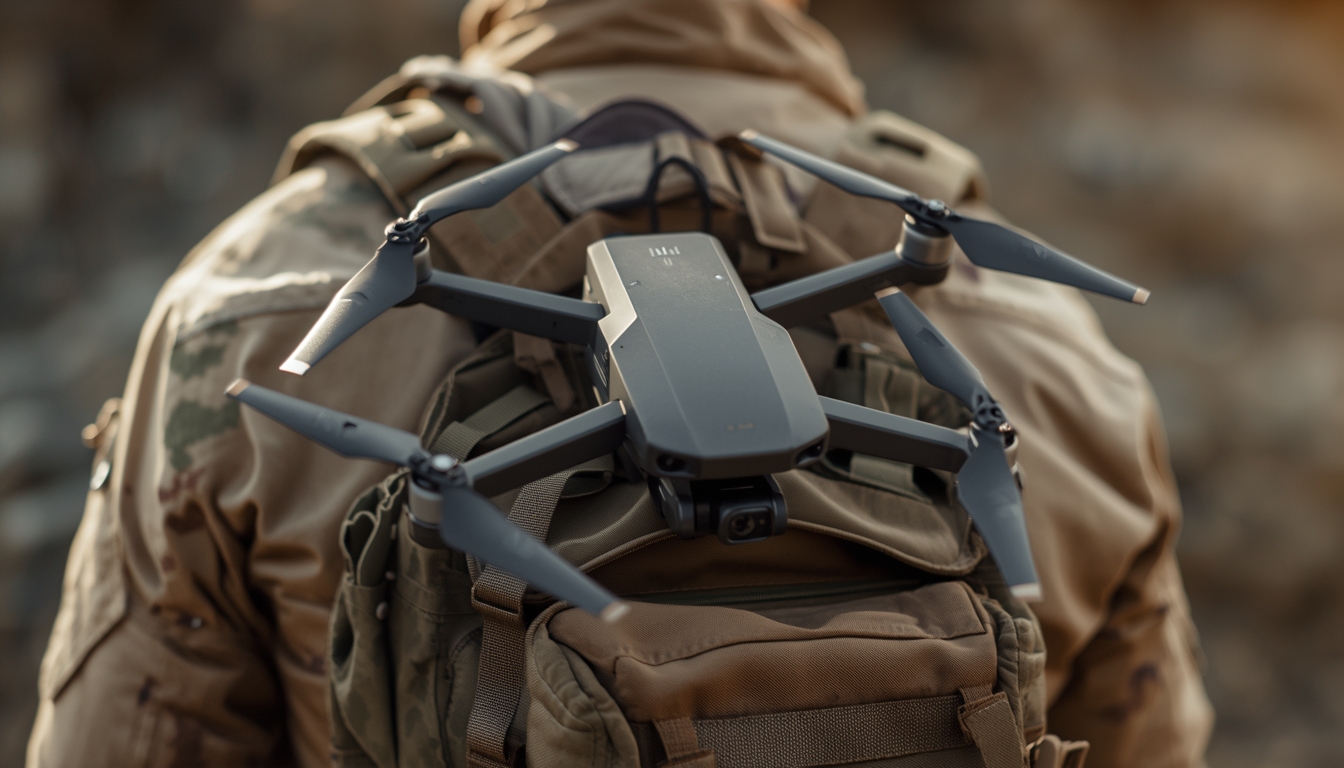
The battlefield has changed faster than the gear on most operators’ backs. For decades, tactical backpack design evolved around a fairly stable set of threats: small arms fire, fragmentation, and the physical demands of dismounted movement. MOLLE webbing, padded hip belts, and hydration bladder compatibility became the gold standard because they solved the problems that mattered most. Then came the drones.
The conflicts in Ukraine and Gaza have demonstrated, with brutal clarity, that small unmanned aerial systems have fundamentally altered the risk calculus for anyone operating in a contested environment. A $400 first-person-view (FPV) drone can track a moving target, navigate urban terrain, and deliver a lethal munition with precision that would have required a precision-guided missile a decade ago. This is not a distant-future problem. It is a present-tense design challenge already reshaping procurement conversations, field modifications, and the priorities of the operators who carry the weight.
The three things drone threats change simultaneously for load carriage:
— Visibility: How detectable your kit makes you from above — visual, thermal, and RF signatures all matter
— Transition speed: How quickly you can move from upright movement to low-cover prone position
— Access architecture: How your gear organization enables response to an overhead threat that arrives with no directional warning
The next generation of tactical backpacks will not be defined by MOLLE row count or ballistic panel integration. They will be defined by how invisible they make you to a sensor 200 meters overhead, how fast you can flatten, and how well they help you manage the signatures modern drone systems are specifically designed to exploit.
Why Drones Break Every Previous Pack Design Assumption
Traditional tactical pack design has always been shaped by the dominant threat of its era. Cold War-era ALICE packs were built for sustained infantry operations. Post-9/11 designs prioritized quick access, modular attachment, and compatibility with body armor systems. The underlying assumption in almost every case was that the primary threat came from the same elevation as the operator — ground-level, directional, and largely predictable in its geometry.
Drones break that assumption entirely. The threat now comes from above, moves autonomously or semi-autonomously, and can loiter over an area waiting for movement or thermal signatures before engaging. Operators in Ukraine have reported modifying their packs with improvised covers and thermal-suppressing materials specifically to reduce their profile from above — field modifications that precede formal procurement changes by years.
The Four Signature Types — What Overhead Sensors Actually Detect
Managing your signature in a drone-contested environment requires understanding what kinds of sensors are looking and what they are designed to find. Each signature type requires different mitigation strategies — and different pack design features. The operators who treat all four as simultaneous requirements, rather than sequential concerns, are ahead of the majority of the commercial gear market.
Traditional Pack Design vs Drone-Era Requirements
The design priorities that produced today’s commercial tactical pack market were validated against a ground-level threat geometry and a procurement environment focused on load capacity, modular attachment, and ballistic integration. Those priorities produced excellent gear for the problems they were designed to solve. They are the wrong framework for the problem operators in Ukraine and Gaza are solving right now.
- Maximize MOLLE attachment density — more external points equals more configuration options
- Maximize volume — 45–65L patrol packs carry everything for extended operations
- Ballistic panel integration — dedicated sleeves for back and torso protection
- Top-down access — efficient packing in the upright position
- High-contrast camouflage patterns visible to friendly forces at distance
- Durable nylon construction prioritized for abrasion and tear resistance
- Integrated radio and hydration accessibility — external pockets and tube ports
- Minimize external attachment density — each point adds visual and geometric signature
- Optimize for low profile — 25–35L range with geometry that enables prone position
- Thermal management materials — IR-aware fabrics and internal heat isolation
- Multi-angle rapid access — bottom panels and side zips for prone-position retrieval
- NIR-compliant colorways — fabric dyes that perform under near-infrared imaging
- RF-shielded compartments — Faraday isolation for active electronic devices
- Concealable webbing and covers — reconfigurable external profile based on environment
Pack Geometry and the Prone Position Problem
One of the less-discussed consequences of overhead drone threats is what happens to your load carriage when you need to go prone. Traditional high-volume tactical packs are optimized for upright movement and standing access. They are not optimized for the rapid, sustained low-profile movement that drone-threatened environments demand. When a drone is overhead and you need to minimize your profile, a large pack worn high on the back becomes a significant liability — it raises your overall height, creates a distinctive silhouette, and makes it physically difficult to flatten against the ground or move through low cover.
- Raises total operator height by 6–12 inches when prone — increases profile from above
- Creates distinctive rectangular silhouette visible to top-down AI recognition
- Weight distribution makes rapid prone-to-crouch transitions physically demanding under load
- Large external surface area maximizes thermal and visual signature
- Multi-day sustained operations where resupply is not possible
- Environments with sufficient overhead cover that drone threat is substantially mitigated
- Vehicle-carried or cache operations where pack is not worn during movement
- When load requirement genuinely exceeds what a 35L system can carry
- Fitting 24-hour mission requirements — medical, comms, water, ammunition — into reduced volume demands strict prioritization
- External attachment temptation increases as internal volume decreases — resist it
- Weight distribution becomes more critical at lower volume as center of gravity shifts
- Lower overall profile enables genuine prone position without massive height addition
- Lighter weight supports faster movement between cover positions
- Smaller external surface reduces thermal and visual signature area
- Better compatibility with modular offload — partial cache of non-critical items is operationally viable
- Geometry works with chest rig + hip-carry distribution for total load management
- Requires more discipline to organize — items across multiple carry systems means more failure points
- Access to any single item may require knowing which system it’s in under stress
- Chest rig combined with pack can create more top-surface clutter if not managed carefully
- Distributes load across body — lowers center of gravity and reduces back-mounted profile
- Critical items on chest rig accessible prone without removing pack
- Pack can be quickly cached while retaining critical kit on chest rig for movement
- Maximum flexibility for reconfiguring load based on specific threat environment
The modular partial-cache principle: A 25–35L pack combined with a chest rig or hip-carry system allows rapid partial offload — cache the pack at a protected location and continue movement with only the chest-carried critical kit. This isn’t a new concept, but drone threats give it renewed urgency. The ability to reduce your signature and increase your mobility simultaneously by caching non-critical weight is a genuine tactical advantage in contested environments.
Rapid Access Architecture Under Overhead Threat
Drone threats create a specific operational stress pattern: the need to respond quickly to an overhead threat that may appear with very little warning. Traditional pack organization prioritizes volume efficiency — fitting the most gear into the available space. Drone-era design needs to prioritize access speed for a specific subset of critical items: anti-drone countermeasures, electronic warfare tools, camouflage materials, and medical equipment.
Dedicated counter-drone compartments
As handheld drone jamming and detection devices become more accessible — and as their use spreads beyond specialized units into police tactical teams and well-equipped civilian preparedness builds — there is a growing case for dedicated external or top-access compartments designed specifically for these tools. The same logic that put hydration bladders in dedicated sleeves applies here: if you need it fast under stress, it needs its own home in the pack architecture, separate from everything else.
Medical access from the prone position
Casualty care in a drone-threatened environment presents a specific challenge: the instinct to stand or kneel to treat a casualty directly conflicts with the need to maintain a low profile when an active drone is overhead. Pack designs that allow medical equipment to be accessed from a prone or low-crouch position — through bottom-access panels, side-zip configurations, or dedicated hip-mounted medical pouches — offer meaningful operational advantage. A tourniquet that requires standing to retrieve is not a tourniquet that works under the conditions most likely to require it in a drone-contested environment.
Feature Comparison: Traditional Priority vs Drone-Era Priority
The table below maps traditional pack evaluation criteria against their drone-era equivalents. This is not a rejection of traditional priorities — MOLLE compatibility and durable construction remain relevant. It is a reweighting: the features that were once considered premium are now baseline requirements, and features that were previously ignored are now primary selection criteria.
| Feature | Traditional Priority | Drone-Era Priority |
|---|---|---|
| // External profile | Modular, high-attachment density — signals capability and enables configuration | Clean, low-contrast — concealable webbing, minimal external information density for AI recognition systems |
| // Material | Durable nylon in camo pattern — abrasion resistance and visual concealment at ground level | IR-aware, thermally managed — performance under both visible and near-infrared imaging |
| // Volume | Maximize capacity — carry everything for extended operations | Optimize for low profile — 25–35L range with geometry that enables prone position and rapid cover |
| // Access | Top-load efficiency — organized for upright retrieval and volume utilization | Multi-angle rapid access — bottom panels, side zips, prone-position retrieval of critical items |
| // Electronics | Integrated hydration and radio compatibility — external ports and dedicated sleeves | RF-shielded compartments — Faraday isolation for active devices when not in use |
| // Color / finish | Camo pattern for visible-spectrum concealment — Multicam, A-TACS, UCP | Near-IR optimized finish — fabric dyes that perform under NIR imaging, not just visible-light observation |
| // Pack covers | Rain cover for weather protection — optional accessory | IR-suppressing integrated cover — reduces thermal and visual signature from above, conceal webbing when needed |
What Current Buyers Should Do Right Now
The full redesign of tactical packs around drone threat environments is still in progress. Most of what is commercially available today reflects the design priorities of the previous decade. But that does not mean current buyers are without options — it means they need to apply a drone-era evaluation framework to choices already on the market, and build toward a more capable system through targeted aftermarket upgrades where purpose-built solutions aren’t yet available.
- 5.11 Rush 24 2.0 (24L, clean profile)
- Oakley Kitchen Sink (34L, minimal external)
- Mystery Ranch Urban Assault 24
- Mission Darkness MOLLE Faraday pouch
- Disklabs DF1 dual Faraday bag
- Slnt Signal Blocking pouch
- Thermal/IR concealment pack covers
- Waterproof + IR-reducing hybrid covers
- Ghillie-style suppression overlays
- Blue Force Gear Chest Rig
- Spiritus Systems LV-119
- Ferro Concepts Slickster (minimal profile)
- NAR Operator IFAK hip pouch
- Blue Force Gear Trauma Kit NOW
- Eleven 10 Rigid IFAK (hip-compatible)
- Garmin inReach Mini 2 (burst transmission)
- SPOT Gen4 (scheduled check-in protocol)
- Zoleo Satellite Communicator
- Neoprene internal organizer sleeves
- Insulated battery pouch options
- Reflective thermal barrier inserts
- DroneShield DroneGun (professional tier)
- RF-sensing detection devices
- Passive RF scanner options for awareness