Cold Weather Survival Gear Is a Tactical Priority, Not a Comfort Upgrade
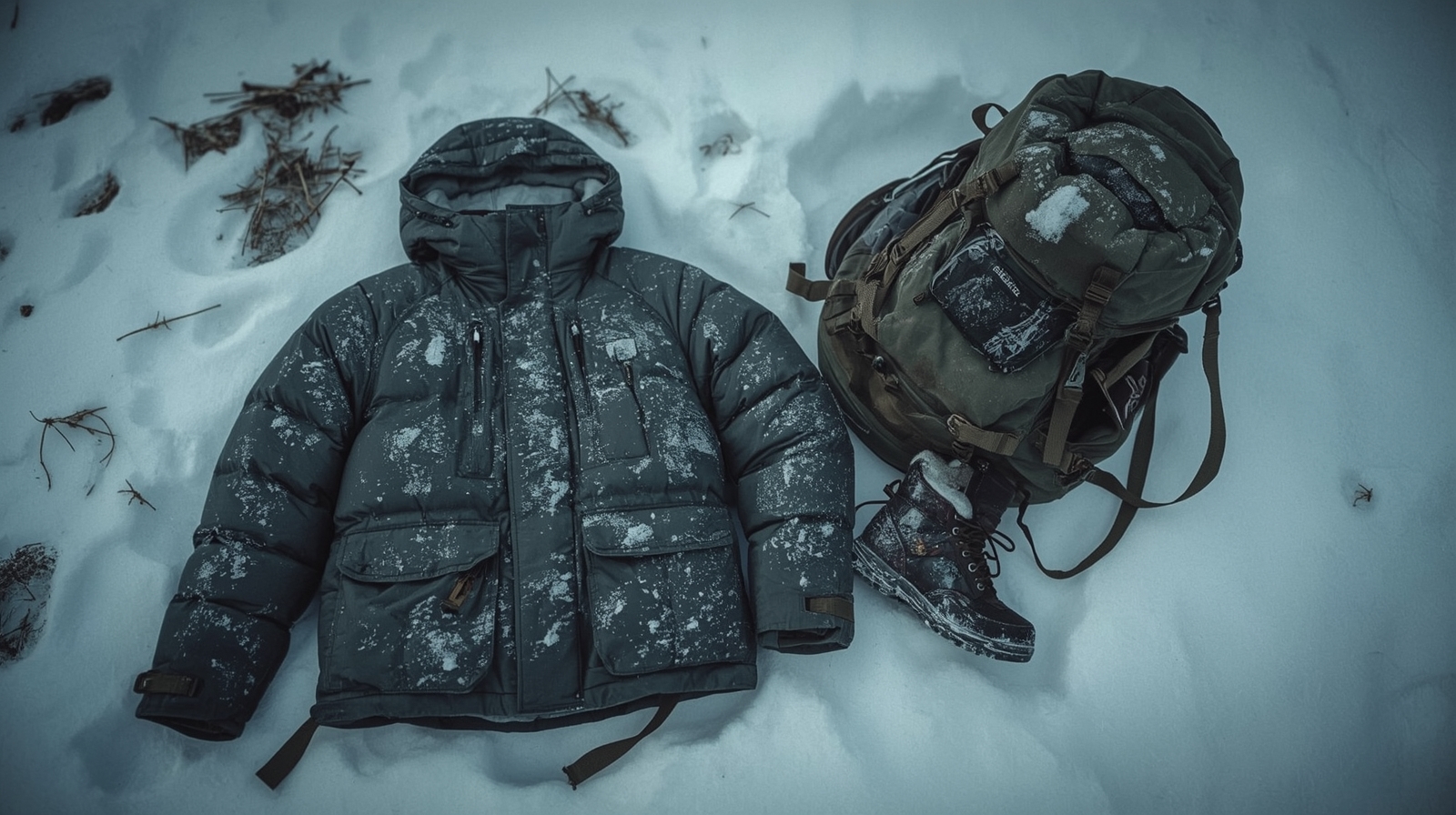
In the winter of 1812, Napoleon Bonaparte led the Grande Armée into Russia with over 600,000 soldiers. He returned with fewer than 100,000. The Russians did not defeat him — the winter did. Historians estimate that cold, disease, and starvation accounted for the overwhelming majority of French casualties, dwarfing battlefield losses by a factor of several times over.

Fast forward to November 1950. U.S. Marine Corps and Army units were encircled by Chinese forces at the Chosin Reservoir in North Korea. Temperatures plummeted to minus 35°F. Weapons froze. Morphine syringes had to be carried inside mouths to prevent them from icing over. Of the roughly 15,000 American casualties during that campaign, a significant portion were cold-weather injuries — not gunshot wounds.

These are not ancient anomalies. They are recurring patterns across military history, and they make a powerful argument: cold weather is not a secondary threat. It is often the primary one. Tactical planning — both professional and civilian — continues to prioritize firepower, ammunition, and offensive capability over thermal protection. This guide argues that cold weather survival gear is a tactical priority of the highest order — equivalent in importance to your primary weapon system — and provides the layering architecture, gear priorities, and field protocols to build a system that reflects that reality.

The verdict of military history — cold kills more soldiers than bullets:

— Napoleon’s Russia (1812): Cold, disease, and starvation accounted for the vast majority of 500,000+ French casualties
— WWI Western Front (1914–15): ~75,000 British trench foot cases in a single winter — the difference was boots and rotation protocols, not firepower
— WWII Operation Barbarossa: Hundreds of thousands of German frostbite casualties from inadequate winter gear at -20°C
— Chosin Reservoir (1950): Cold-weather injuries accounted for a significant share of 15,000 American casualties

U.S. Army Research Institute of Environmental Medicine analysis: cold-weather injuries are among the most consistently preventable casualties in military operations — and among the most consistently underestimated by commanders in the planning phase.

The Historical Record: What Cold Weather Does to Fighting Forces

The pattern repeats across virtually every cold-weather conflict in recorded history: forces that underinvest in thermal protection pay for it in casualties, degraded operational effectiveness, and lost campaigns. The data is unambiguous. The lesson has been available for centuries. And yet it keeps being learned the hard way.

❄️
Western Front
// WWI · 1914–15
// Cold Failure
  • ~75,000 trench foot cases in the British Army alone in a single winter
  • Poorly drained trenches kept feet wet for days and weeks continuously
  • No rotation protocol for wet sock changes — foot hygiene treated as a logistics afterthought
// Doctrine Lesson
  • German forces, better equipped and with more experience managing winter conditions, suffered significantly fewer cases
  • The difference was not firepower — it was boots, dry socks, and rotation protocols
  • Prevention required no new technology — only supply discipline and command prioritization
🌨️
Operation Barbarossa
// WWII · 1941–42
// Cold Failure
  • German Wehrmacht deployed without adequate winter gear — soldiers photographed in summer uniforms at -20°C
  • Frostbite casualties numbered in the hundreds of thousands before Moscow
  • Offensive momentum collapsed not from Soviet firepower alone, but from cold-degraded fighting capacity
// Doctrine Lesson
  • Soviet forces, fighting in their own climate with purpose-designed winter equipment, held and then counterattacked
  • Winter gear is not a logistics variable — it is a strategic variable that determines operational tempo
  • Procurement of thermal protection must precede deployment, not follow it
🥶
Chosin Reservoir
// Korea · Nov–Dec 1950
// Cold Failure
  • -35°F temperatures froze weapons, vehicles, and medical supplies
  • Morphine syringes required oral warming to function
  • Cold-weather injuries constituted a significant share of ~15,000 total American casualties
// Doctrine Lesson
  • Units that maintained thermal discipline — scheduled sock changes, insulated sleeping systems, buddy checks for frostbite — preserved more operational capacity than those relying on morale alone
  • Thermal protocols must be command-mandated, not left to individual initiative under stress
🏔️
Ukraine / Afghanistan
// Modern · 2001–2024
// Cold Failure
  • Ukraine 2022–24: widespread cold-weather injuries among under-equipped units; thermal management ranked alongside ammunition in some unit supply requests
  • Afghanistan: coalition forces at 8,000+ feet facing 50°F temperature swings from midday to night — units treating thermal gear as secondary paid in medical evacuations
// Doctrine Lesson
  • Quality base layers, waterproof shells, and insulated footwear were among the most urgent logistical needs — often outranking ammunition requests in certain unit communications
  • Modern conflict confirms ancient pattern: the environment is always a combatant, and it must be equipped against with the same discipline as any armed opponent

The Physiology of Cold: Why the Body Fails Before the Fight

To understand why thermal gear deserves top billing, you need to understand what cold actually does to the human body — and how quickly it does it. The answer is more operationally consequential than most tactical planners account for, because the degradation that matters most happens before the person knows they’re in danger.

// Hypothermia Degradation Sequence — Core Temperature vs Combat Effectiveness
98.6°F
Normal
Baseline — Full Combat Effectiveness
Normal core body temperature. Full cognitive function, fine motor control, reaction time, and decision-making capacity. Baseline combat effectiveness at 100%.
// Tactical status: fully operational
96°F
Subclinical
The Hidden Deficit — Operator Doesn’t Know
No clinical hypothermia diagnosis. The person feels mildly uncomfortable at most. But reaction time, accuracy, and judgment are already measurably compromised. This is the most tactically dangerous stage — degraded performance with no subjective warning. A soldier at 96°F is fighting at a deficit without knowing it.
// Tactical status: degraded — shooting accuracy reduced, decision latency increased. Feels fine. Is not.
95°F
Mild Hypo
Hypothermia Onset — Cognitive and Motor Degradation
Clinical hypothermia begins. Cognitive function degrades noticeably — decision-making slows, situational awareness narrows, and fine motor skills deteriorate. Shivering intensifies as the body attempts to generate heat. Navigation errors increase. Communication clarity reduces.
// Tactical status: significantly impaired — weapon handling degraded, navigation unreliable, fire commands slowed
90°F
Moderate
Confusion, Discoordination, Unable to Self-Rescue
Confusion sets in. Coordination is severely impaired. The person can no longer reliably self-rescue — they cannot perform the actions necessary to warm themselves. Paradoxical undressing may begin (a poorly understood neurological response where the person removes clothing despite cold). Shivering may stop — a dangerous sign that the body is losing the thermogenic fight.
// Tactical status: non-functional — requires immediate external intervention and warming. Mission failure.
86°F
Severe
Unconsciousness Risk — Cardiac Arrest Possible
Unconsciousness and cardiac arrest become real possibilities. Below this threshold, survival without immediate aggressive rewarming — and in severe cases, medical intervention — becomes unlikely. The person is a casualty in the fullest sense. Multiple personnel are now required to manage one cold injury.
// Tactical status: casualty requiring medical evacuation. One cold injury has now consumed two or more operational personnel.
The most dangerous cold exposure stage is 96–98°F — because the operator feels normal. Cognitive and motor degradation begins well before a person experiences subjective distress. In a firefight, the margin between 98°F and 96°F is the difference between a hit and a miss. In a navigation scenario, it’s the difference between finding shelter and wandering into exposure. Thermal management is not about comfort. It is about maintaining the cognitive and physical baseline required to operate effectively.

The Three-Layer System: Tactical Application

The layering principle — base, mid, outer — is well-established in both military and outdoor communities. Tactical application requires more nuance than recreational use: layers must work under load-bearing equipment, allow full weapon-handling range of motion, and be configurable in under two minutes with gloves on. Each layer has a specific function, and the failure modes of each layer are predictable and preventable.

// Three-Layer Tactical System — Function, Materials, Tactical Specifications
L1
Base Layer
Moisture Management Foundation
// Function: wick sweat away from skin before evaporative cooling occurs
The base layer sits against skin and performs one function: move moisture away from the body surface. Merino wool regulates temperature naturally, resists odor over multiple days without washing — critical in extended field operations — and retains meaningful insulation when damp. Synthetic polyester wicks faster and dries quicker, making it preferable for high-output activities where sweat volume is high. A midweight merino blend or military-spec synthetic base layer provides the best balance of moisture management, odor control, and durability for tactical use.
// Disqualifying materials: cotton in any percentage — absorbs sweat, holds it against skin, accelerates evaporative heat loss. There are no exceptions. One cotton layer can negate the protection of an otherwise complete system.
L2
Mid Layer
Active Insulation
// Function: trap warm air in a network of insulating pockets, retain heat during rest phases
The mid layer provides the bulk of insulation. Synthetic insulation (PrimaLoft, Thinsulate, Polartec Alpha) retains 60–80% of its insulating value when wet and dries faster than down — making it the preferred tactical choice for unpredictable field conditions where drying windows don’t exist. Down offers superior warmth-to-weight but suffers near-total insulation collapse when saturated. Fleece provides excellent breathability for high-activity movement and is the default active-movement mid layer. A tactical mid layer must allow full range of motion, fit under a plate carrier or chest rig without bunching, and compress enough to pack into a daypack without dominating the loadout.
// Tactical constraint: down is operationally viable only with strict dry-bag discipline and reliable drying windows. In wet cold environments or sustained operations, synthetic insulation is the default.
L3
Outer Shell
Wind and Water Barrier
// Function: block wind and precipitation, allow moisture vapor from inner layers to escape outward
The outer shell is the interface between your thermal system and the environment. Waterproof-breathable membranes (Gore-Tex and equivalents) represent the current standard for serious cold-weather tactical use. A quality outer shell must be durable enough to withstand brush, rock, and pack abrasion while maintaining waterproofing over extended field use. For tactical operators, the outer layer must also accommodate gear attachment — loops, pockets, compatibility with load-bearing systems — without compromising thermal performance. DWR coatings degrade with use; carry Nikwax TX.Direct spray for field reapplication on extended operations.
// Breathability floor: 20,000 g/m²/24h or higher for active use. Below 10,000 traps sweat vapor and saturates insulation from the inside during movement — a failure mode that is indistinguishable from external wetting.
🐑
// Gear · Base Layer
Merino Wool Base Layers — Tactical and Field Use
Smartwool · Icebreaker · Minus33 — midweight and heavyweight sets, multi-day odor resistance
Browse ›

Extremity Protection: The Most Neglected Tactical Priority

If there is one area where tactical planners and individual operators consistently underinvest, it is footwear and extremity protection. The hands and feet are the first casualties of cold exposure, and their loss — even temporarily through frostbite or reduced dexterity — is operationally catastrophic. Cold hands cannot operate a weapon, apply a tourniquet, use a radio, or read a map. Cold feet cause mobility loss. Trench foot was responsible for more British casualties in the Falklands War than Argentine fire in certain units — in a conflict that lasted 74 days.

Boots: insulation rating matched to activity level

Cold-weather tactical boots must balance insulation, waterproofing, ankle support, and sole traction. Insulation ratings (200g, 400g, 800g, 1000g+) should match the expected temperature range and activity level. A highly active operator generates significant body heat — overinsulated boots lead to sweating, dampness, and paradoxically increased cold injury risk. A static operator (sniper, vehicle crew, observer) needs significantly more insulation to compensate for absent activity-generated heat. Vapor barrier socks — a thin waterproof layer between inner and outer sock — represent an advanced technique for extreme cold: they prevent moisture from reaching the outer insulating layer, maintaining dry insulation throughout extended static operations.

The glove system — three tiers for tactical dexterity

// Tactical Glove System — Three-Tier Dexterity-to-Warmth Stack
T1
Liner
Thin Liner Glove — Full Fine Motor Capability
// For: weapon operation, mag changes, radio, map reading, medical procedures
Merino wool or thin synthetic liner allowing full dexterity for all precision tasks. This is the only tier where fine motor work is fully preserved. Worn alone in mild cold, under T2 in moderate cold, and under T2+T3 in extreme cold. Carry a spare set in a sealed bag inside your jacket — warming them before putting them on prevents the heat drain of cold-glove contact.
T2
Mid Glove
Mid-Weight Tactical Glove — Active Operations
// For: general movement, moderate cold, most field tasks with reduced dexterity tolerance
Insulated, water-resistant tactical glove for general field use over a liner. Accepts reduced fine motor capability in exchange for meaningful insulation. The tier you spend the most operational time in. Leather palms and synthetic insulated backs offer the best combination of durability, grip, and warmth management. Practice all critical tasks wearing this tier — reduced dexterity under tactical gloves is a learned adaptation, not a permanent limitation.
T3
Overmitten
Trigger-Finger or Full Mitten — Extreme Cold and Static
// For: static positions, extreme cold below -10°F, observation posts, emergency warmth
Trigger-finger mitts keep four fingers together for maximum warmth while preserving index finger extension for weapon operation. Full mittens over the T2 glove provide emergency and static-position warmth. This tier substantially limits dexterity — practice all tasks you may need to perform before needing this tier in a real cold-weather scenario. Never remove T3 mitts in extreme cold without ensuring T1 liners are immediately accessible.
Practice every tactical task wearing your cold-weather glove system. Weapon manipulation, magazine changes, radio operation, applying a tourniquet, writing a grid — all degrade with both cold and bulk. A glove system that has never been worn during training drills is a glove system you cannot trust under operational stress. The operators who perform best in cold are not those with the best gear — they are those who have trained the most in conditions that replicate the real threat.
🧤
// Gear · Glove System
Three-Tier Tactical Glove Systems — Liner, Mid, Overmitten
Hestra Army Leather · Outdoor Research Alti Mitt · Mechanix liner gloves — complete dexterity stack
Browse ›

Sleeping Systems and Thermal Recovery

Sustained cold-weather operations require more than what you wear. Thermal recovery — the ability to restore core body temperature during rest periods — is a critical operational capability that is consistently treated as a logistics afterthought. National Outdoor Leadership School (NOLS) research consistently shows that inadequate thermal recovery during rest periods compounds cognitive degradation — a direct combat effectiveness concern that compounds with each successive night of insufficient sleep warmth.

A sleeping bag rated to 0°F is designed to keep a person alive at that temperature — not comfortable, and certainly not rested and combat-ready. For genuine operational effectiveness, select a bag rated 10–15 degrees below your expected low temperature, and use a quality sleeping pad with an R-value of 4 or higher. Conductive heat loss to the ground is as significant as radiative loss to the air — a high-quality bag on bare ground loses a meaningful fraction of its rated protection to the surface beneath it.

Gear extends your survival window. Skills determine whether you use that window effectively. Neither alone is sufficient.

Every cold-weather operator should carry the knowledge and minimal equipment to construct emergency thermal protection: a bivy sack or emergency space blanket adds negligible weight but can prevent death in an unexpected overnight exposure. The ability to construct a debris shelter, snow trench, or improvised windbreak from available materials is a foundational cold-weather survival skill that no amount of gear fully replaces. Gear and skills are complementary systems, not substitutes.

Gear Priority Tier Framework

Not all cold-weather gear investments deliver equal tactical returns. The table below provides a priority framework based on casualty prevention value and operational impact, derived from both historical incident analysis and the U.S. Army Research Institute of Environmental Medicine research on cold-weather injury prevention. Tier 1 items should be treated as non-negotiable — equivalent in priority to a primary weapon system. Tier 2 items are mission-essential for operations extending beyond a single day. Tier 3 items provide meaningful supplemental protection and should be included when weight and space allow.

Gear Category Casualty Prevention Value Operational Impact Priority
Insulated base layer Very High — prevents the primary cold-injury mechanism Maintains cognitive function and decision-making capacity throughout the operational timeline Tier 1
Waterproof outer shell Very High — wet-cold is the fastest path to hypothermia Prevents the moisture saturation of insulation layers that converts cold into lethal cold Tier 1
Cold-weather boots Very High — trench foot and frostbite are the most common cold injuries Prevents mobility loss — a frostbitten foot is a non-ambulatory casualty requiring support Tier 1
Insulated glove system High — hand cold injury directly eliminates weapon, medical, and comms capability Maintains trigger dexterity, magazine manipulation, and medical procedure capability under cold exposure Tier 1
Sleeping system High — inadequate thermal recovery compounds cognitive degradation each successive night Enables the rest-phase restoration of core temperature that maintains next-day combat effectiveness Tier 2
Mid-layer insulation High — core temperature maintenance during rest and static operations Provides the insulation layer that completes the system when base layer alone is insufficient Tier 2
Emergency bivy / shelter Medium-High — contingency against the unexpected overnight exposure Adds negligible weight while providing a survival margin against the scenarios that kill people who planned well but encountered the unexpected Tier 2
Chemical heat packs Medium — supplemental extremity warming during extended static operations Extends functional capability of hands and feet in static positions where gloves alone are insufficient Tier 3
Balaclava / neck gaiter Medium — head and neck account for significant heat loss in uncovered conditions Seals the collar gap that creates a thermal chimney — one of the most consistent heat loss pathways in layered systems Tier 3

Common Cold-Weather Mistakes That Get People Killed

The cold-weather failure modes that repeat across history and modern incident reports share a recognizable pattern. They are not failures of courage or fitness — they are failures of planning, prioritization, and awareness. Understanding them before the cold is the equivalent of establishing a baseline: you need to know what failure looks like to recognize it early enough to correct it.

// Fatal Pattern
Overconfidence in Fitness
Fit, experienced operators consistently underestimate cold-weather risk because they feel capable. Fitness does not confer cold immunity — it may actually accelerate cold injury risk through sweating during high-intensity movement, followed by rapid chilling during rest. The fitter the operator, the more heat they generate during movement — and the more catastrophic the heat loss when they stop.
// Correct Protocol
Thermal Discipline Is Independent of Fitness
Treat thermal management as a system requirement, not a personal toughness variable. The most physically capable operators still require scheduled layer changes, dry sock rotations, and regular extremity checks. The USARIEM analysis is unambiguous: cold-weather injuries are consistently underestimated by the most experienced operators, not the least experienced ones.
// Fatal Pattern
Cotton in the Kit
Cotton denim, cotton t-shirts, and cotton underwear have no place in a cold-weather tactical kit. Cotton absorbs moisture, holds it against the skin, and accelerates heat loss through evaporative cooling. One cotton layer against the skin can negate the thermal protection of an otherwise well-designed system — making the entire layering investment functionally worthless at the exact moment it’s most needed.
// Correct Protocol
Zero Cotton Policy Below Freezing
Replace every cotton base layer with merino wool or synthetic. Audit your full kit before deployment — one cotton underlayer buried in the kit because it was comfortable at room temperature will matter at mile 12 in wet conditions. There are no tactical scenarios where cotton’s properties represent an acceptable cold-weather tradeoff.
// Fatal Pattern
Ignoring Wind Chill
Air temperature alone is a poor indicator of cold injury risk. Wind dramatically accelerates convective heat loss — the same mechanism that requires an outer shell to block. A temperature of 20°F with a 30 mph wind creates an effective temperature of approximately -6°F. Operators who dress for the thermometer reading rather than the effective temperature are systematically underprepared for real-world field conditions.
// Correct Protocol
Always Assess Wind Chill, Not Just Temperature
Use wind chill as your primary cold injury risk assessment tool, not ambient temperature. Any exposed skin in wind above 10 mph at sub-freezing temperatures carries measurable frostbite risk regardless of how the thermometer reads. A windproof outer layer is the direct countermeasure — and its value scales with wind speed, not temperature alone.
// Fatal Pattern
Waiting for Pain as a Warning
Frostbite is painless in its early stages. Operators who wait for pain as a warning signal will often have already sustained tissue damage before they respond. This is well-documented and consistently violated in field conditions — because it requires acting on absence of sensation rather than presence of pain, which runs against human intuition for injury response.
// Correct Protocol
Visual and Scheduled Extremity Checks
Build regular extremity checks into standard operating procedures as scheduled events — not as responses to symptoms. Look for white or waxy skin, abnormal pallor, or loss of sensation during buddy checks. The check interval should decrease as temperature drops and wind chill increases. Treat loss of sensation as a medical emergency, not a temporary inconvenience.
// Fatal Pattern
Thermal Gear as a Weight Penalty
Every gram of cold-weather protection left behind to save weight is a calculated gamble against the environment. In a firefight, you can maneuver, use cover, and apply skill to reduce exposure. Against hypothermia, your only defense is what you’re wearing. Thermal gear cut from the loadout cannot be improvised in the field at the moment you discover you needed it.
// Correct Protocol
Non-Negotiable Tier 1 Items, Always
Treat Tier 1 gear — base layer, outer shell, cold boots, glove system — as non-negotiable loadout requirements equivalent to your primary weapon. These are not comfort items that can be weight-optimized out. Tier 2 and Tier 3 items can be evaluated against mission length and resupply probability. Tier 1 items cannot. The historical record is unambiguous on the cost of this calculation going wrong.
// Field Gear · Amazon
Cold Weather Tactical Kit
Every tier-1 and tier-2 category from this guide. Affiliate links support this site at no extra cost to you.
🐑
Tier 1 · Base Layer
Merino Wool Base Layers
Multi-day odor resistance and wet-insulation retention. The non-negotiable foundation layer. Buy in matched top and bottom sets and carry two complete sets for dry rotation.
  • Smartwool Intraknit 250 set
  • Icebreaker 260 Tech crew set
  • Minus33 midweight base layer
Browse on Amazon ↗
Search · Amazon.com
🌧️
Tier 1 · Outer Shell
Waterproof-Breathable Hardshells
20,000+ g/m²/24h breathability with full waterproofing. Pit zips for heat management during movement. The environment blocker that makes the entire inner-layer system functional.
  • Arc’teryx Beta AR (Gore-Tex Pro)
  • Outdoor Research Foray II
  • Marmot Minimalist — budget tier
Browse on Amazon ↗
Search · Amazon.com
🥾
Tier 1 · Footwear
Cold-Weather Tactical Boots
Insulation gram-rated to match your activity level. Active operators: 200–400g. Static operators: 800g+. Waterproof membrane throughout. Match rating to role, not ambient temperature alone.
  • Danner Pronghorn 400g (active/mobile)
  • Bates GX-8 800g (static/cold)
  • Belleville C320 ST cold weather
Browse on Amazon ↗
Search · Amazon.com
🧤
Tier 1 · Glove System
Three-Tier Tactical Glove Stack
Liner + mid tactical glove + trigger-finger overmitten. Complete dexterity-to-warmth coverage. Practice all tactical tasks wearing each tier before field deployment.
  • Liner: Outdoor Research ActiveIce
  • Mid: Hestra Army Leather Patrol
  • Mitt: OR Alti Mitt trigger finger
Browse on Amazon ↗
Search · Amazon.com
🧥
Tier 2 · Mid Layer
Synthetic Insulated Mid Layers
Wet-tolerant insulation for field conditions where drying windows don’t exist. 60–80% retention when wet. Packable to small volume. Must fit under plate carrier without bunching.
  • Arc’teryx Atom AR (Coreloft)
  • Patagonia Nano-Air (Polartec Alpha)
  • Mountain Hardwear Ghost Whisperer Syn
Browse on Amazon ↗
Search · Amazon.com
🛌
Tier 2 · Sleep System
Cold-Weather Sleeping Systems
Rate 10–15°F below expected low. Pair with R-4+ sleeping pad to prevent conductive heat loss to the ground — as significant as radiative loss to air. Thermal recovery enables next-day effectiveness.
  • USGI Intermediate Cold Weather bag
  • Kelty Cosmic 0° synthetic
  • Western Mountaineering Alpinlite (down)
Browse on Amazon ↗
Search · Amazon.com
🧦
Tier 1 · Foot System
Cold-Weather Sock Rotation Sets
Three pairs minimum per 24 hours in extended operations. Merino-nylon blend for wet insulation and odor resistance. Dry sock changes prevent trench foot — entirely preventable with the right sock and the right rotation.
  • Darn Tough full-cushion boot crew
  • Smartwool PhD Outdoor Heavy
  • Wigwam Snow Sirocco heavyweight
Browse on Amazon ↗
Search · Amazon.com
🛡️
Tier 2 · Emergency
Emergency Bivvy and Space Blankets
Negligible weight, genuine survival margin. The contingency for the unexpected overnight exposure. Gear that extends your survival window until skills can be applied. Never leave without one in cold environments.
  • SOL Escape Bivvy (reusable, breathable)
  • Survive Outdoors Longer emergency blanket
  • AMK Heatsheets bivvy (2-person)
Browse on Amazon ↗
Search · Amazon.com